

How Much Does Basement Waterproofing Cost in NJ
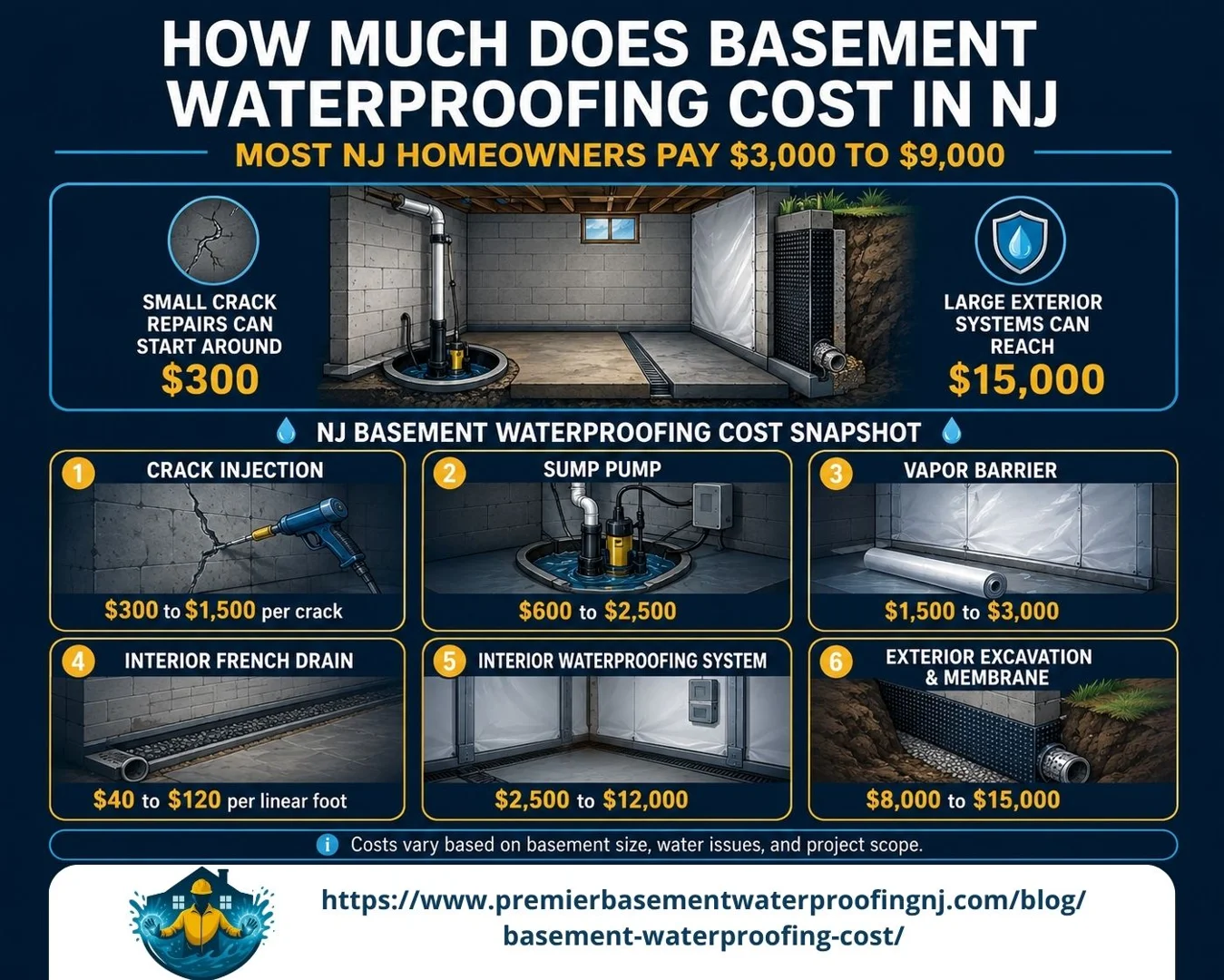
Basement waterproofing costs in New Jersey range from $3,000 to $9,000 for most homeowners. Small jobs like sealing a single foundation crack start at around $300, and a full exterior excavation with membrane and drain tile can reach $15,000.
Where your exact price lands comes down to one measurement, and it’s probably not the one you expect. Interior drainage is priced by the linear foot of wall, so a basement with 130 feet of perimeter runs about double that of one with 65 feet. Square footage barely comes into it.
Here’s what each method costs, what a typical 1,000-square-foot basement works out to, and the things that push a quote up or down.
Cost Snapshot for New Jersey
| Method | Typical NJ Cost |
|---|---|
| Foundation crack injection | $300 to $1,500 per crack |
| Sump pump installation | $600 to $2,500 |
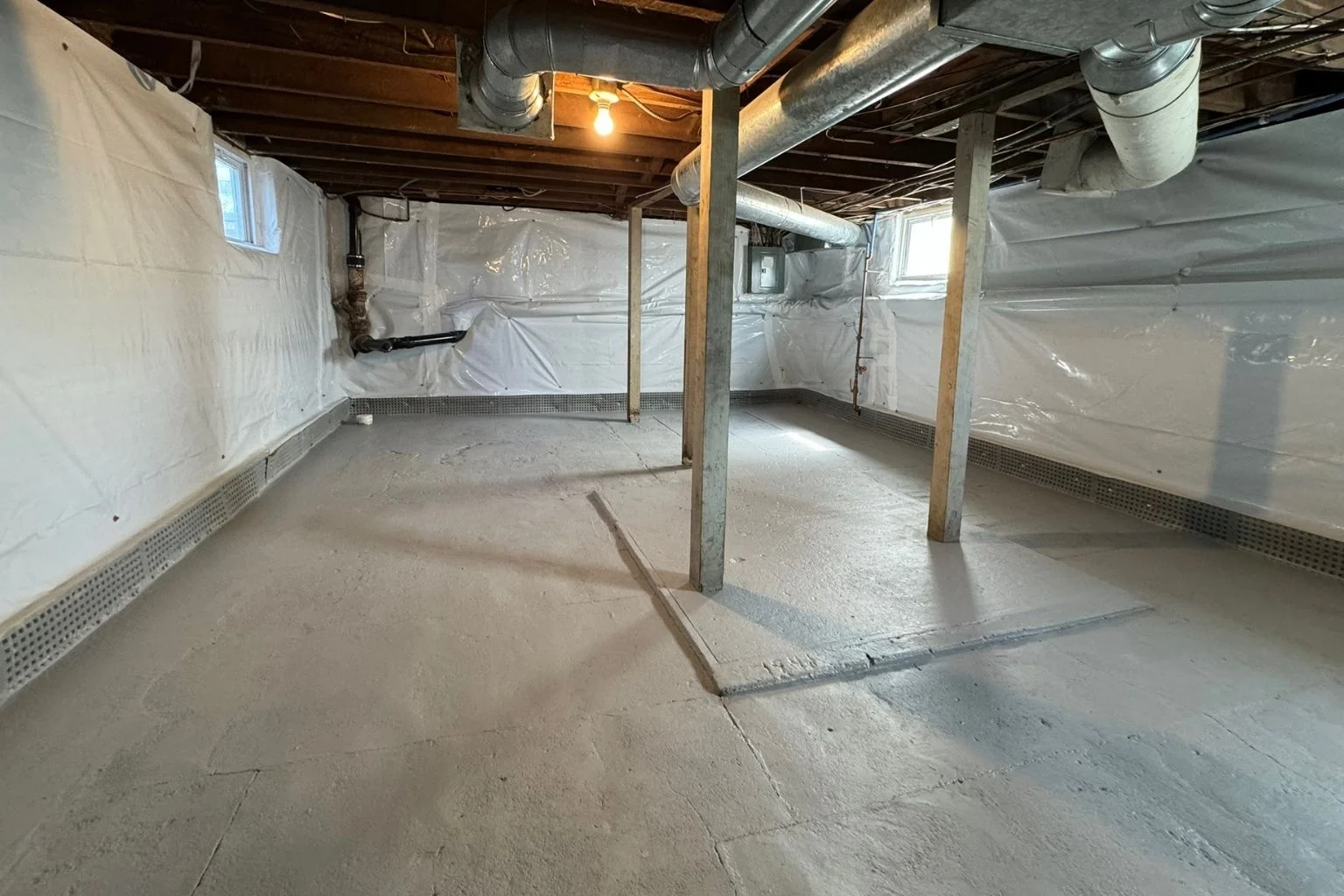
| Vapor barrier, full basement | $1,500 to $3,000 |
| Basement dehumidifier | $800 to $2,000 |
| Interior French drain | $40 to $120 per linear foot |
| Basic interior system | $2,500 to $5,000 |
| Comprehensive interior system | $5,000 to $12,000 |
| Exterior excavation and membrane | $8,000 to $15,000 |
Most jobs combine a few of these. A perimeter drain with no sump pump has nowhere to send the water it collects, and a sump pump with no drain has nothing feeding it.
What a 1,000-Square-Foot Basement Costs
Call it 130 linear feet of perimeter wall, which is what a 1,000-square-foot basement usually works out to. Three scopes come up most often at that size.
Crack Repair Only, $300 to $1,500 per Crack
This is the fix when one crack in a poured wall is weeping and the rest of the basement stays dry. Epoxy or polyurethane gets injected from the inside. A wide, deep, actively leaking crack costs more than a hairline one.
Interior French Drain With Sump Pump, $4,500 to $8,000
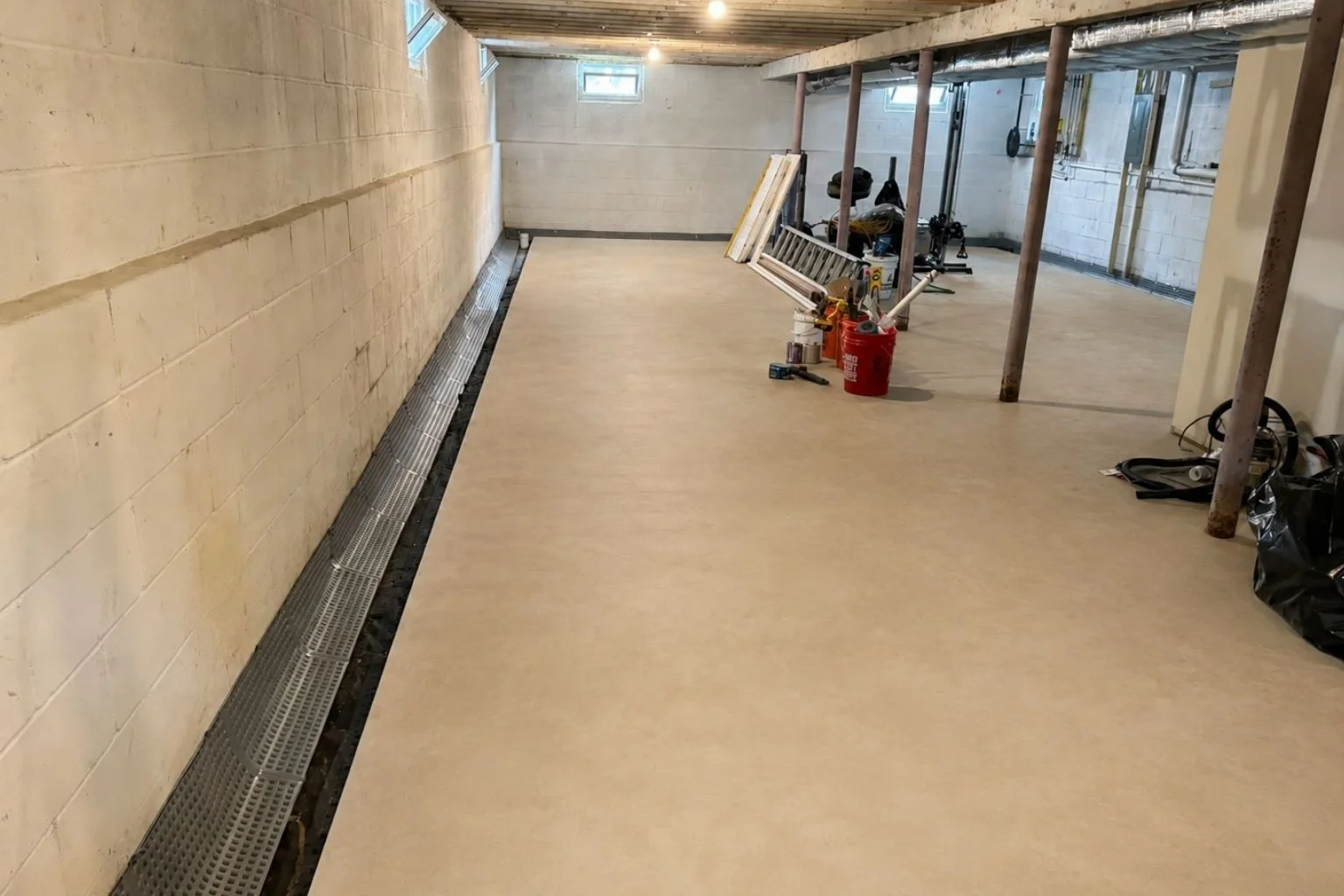
This is where most homeowners end up. The crew trenches the slab around the perimeter, installs a 3- or 4-inch perforated pipe encased in up to 12 inches of blue stone, wraps it in non-woven laminated barrier fabric, and routes it to a properly sized 16–18 inch sump pit before repouring the concrete. Our French drain installation page walks through the process.
Exterior Excavation and Membrane, $8,000 to $15,000
The crew digs down to the footings outside, cleans and patches the masonry, coats it, lays drain tile, then backfills. It stops water at the wall, so nothing has to be managed once inside, and the machinery and labor are what you are paying for.
Interior work handles the large majority of residential water problems in Monmouth County, and our interior waterproofing systems page covers the components. Exterior work makes sense when the foundation itself needs attention or when drainage around the property needs correcting first.
Why Per-Square-Foot Pricing Misleads
You’ll see waterproofing quoted at $3 to $10 per square foot. The figure is repeated everywhere, and it tells you very little.
Think about it this way. Consider two 1,000-square-foot basements: one is a long rectangle with 160 feet of perimeter wall, while the other is closer to a square with just 130 feet.
Same floor area, but there is a thirty-foot difference in the thing that actually gets trenched. Ask for a per-linear-foot number, and you can finally hold two quotes side by side.
What Moves Your Quote
Two contractors can look at the same basement and land thousands apart. While national franchise competitors often inflate quotes by 10% or more to cover heavy sales commissions, Premier’s owner-operated model eliminates commission markups to deliver transparent, fair pricing based on actual job complexity.
The factors below are listed roughly in order of how much they move the number.
- Perimeter length. The big one. Walk the inside of your foundation walls with a tape measure, and you already know more than most homeowners do when the estimator arrives.
- Component specifications. Exact pipe diameter and stone type/depth—such as Premier’s standard of 3- or 4-inch perforated pipes encased in up to 12 inches of blue stone—along with pump horsepower, pit size, and repoured concrete thickness.
- Wall construction. Poured concrete walls drain more simply than hollow cinder blocks. Block foundations often need weep holes drilled along the bottom course so water trapped inside the cores can reach the drain, which adds labor.
- Finished space. Drywall, framing, and trim come out along the work path and go back in when the drainage is in. A finished basement can add a few thousand to the identical scope.
Unlike contractors who leave you to find separate drywall installers, Premier Basement Waterproofing provides a complete one-stop solution by handling all framing repair, sheetrock replacement, 3-coat spackling, and sanding in-house.
- Access and obstructions. Mechanical rooms, water heaters, and support columns slow trenching. Narrow stairs and tight exterior access matter on the excavation side, since equipment that cannot reach the wall means hand digging.
- Foundation condition. Bowing walls, stair-step block cracks, or settled footings must be stabilized alongside drainage. Depending on the damage, solutions range from carbon fiber straps and non-shrinking grout with rebar pins to helical pile stabilization. Our foundation repair and underpinning pages cover those.
- Soil and water table. Monmouth County sits on heavy clay through much of Manalapan, Howell, and Freehold. Clay holds water against the foundation and swells when wet, which raises the pressure on your walls and makes exterior excavation slower going than it would be in sand. You can look up what is actually under your own property with the USDA Web Soil Survey, which maps clay content and drainage down to the parcel and is refreshed annually.
Costs That Arrive With the Project
The drainage is usually not the only invoice. Here is what else tends to show up.
- Permits, $75 to $500. Most townships require one for structural work or exterior excavation. Your contractor should pull it.
- Mold remediation, $500 to $3,500. The U.S. Environmental Protection Agency puts the threshold at about 10 square feet, below which most homeowners can handle cleanup themselves and above which professional remediation applies. A vapor barrier and dehumidification keep humidity down afterward.
- Water damage repair, $1,360 to $6,290. Soaked drywall, insulation, and flooring are their own job, separate from the drainage.
- Debris and contents removal, $200 to $1,000. Clearing the basement yourself ahead of the crew keeps this off your invoice.
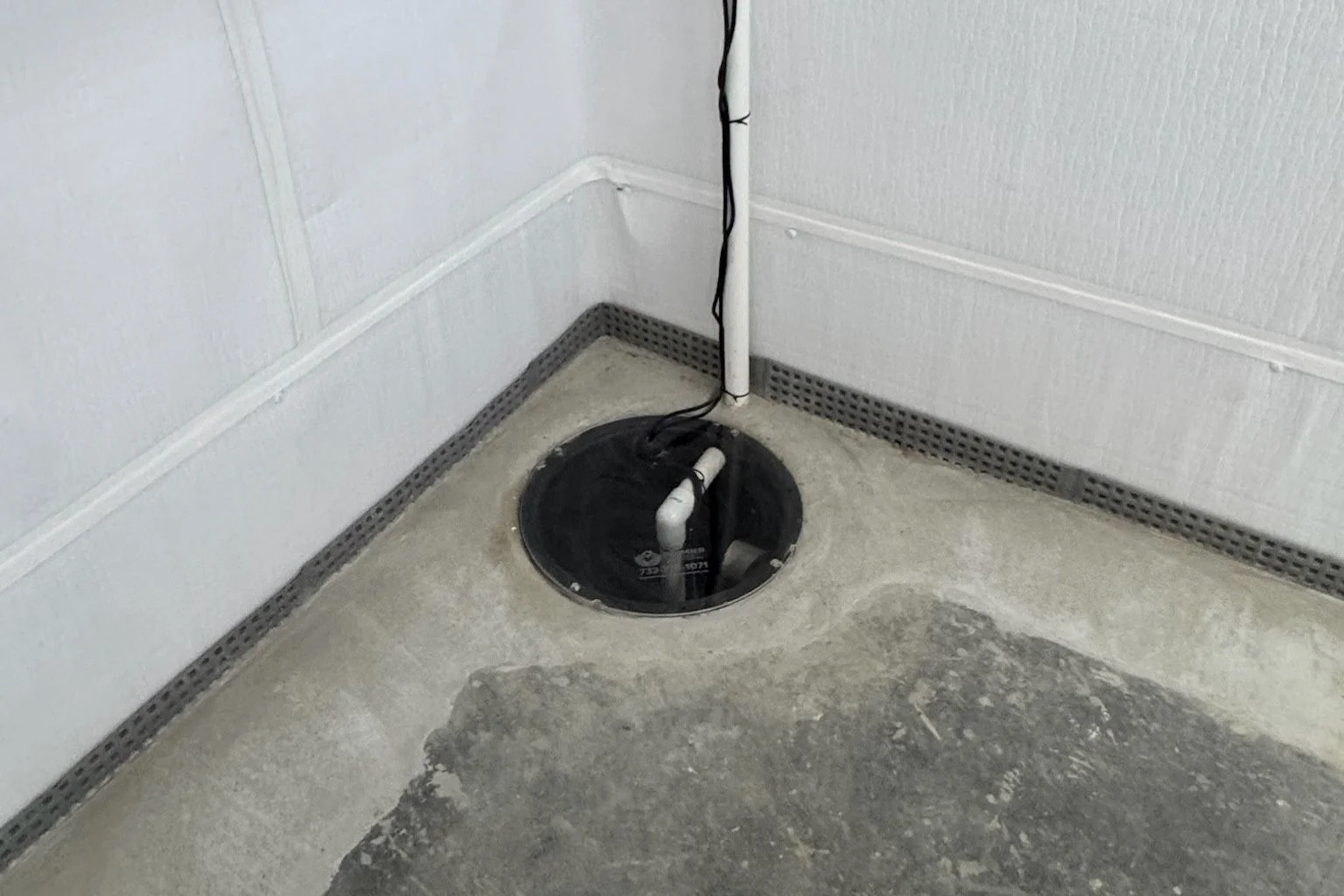
- Battery backup for the sump pump. Nor’easters knock the power out at exactly the moment groundwater peaks, which is the whole argument for one. Our sump pump battery backup guide covers the options.
Ongoing Costs After Installation
Once the system is in, it mostly looks after itself. A few things still cost money down the road.
Sump pumps last 7 to 10 years and cost $600 to $2,500 to replace. Test the float switch once a year and clean out the basin while you are down there, which takes twenty minutes and catches most failures early. Sealants, where they were used, require reapplication every five to ten years. A few hundred dollars a year covers the lot.
Five Ways to Spend Less
None of these involves cutting corners on the system itself. They are about arriving at the right scope and doing the free things first.
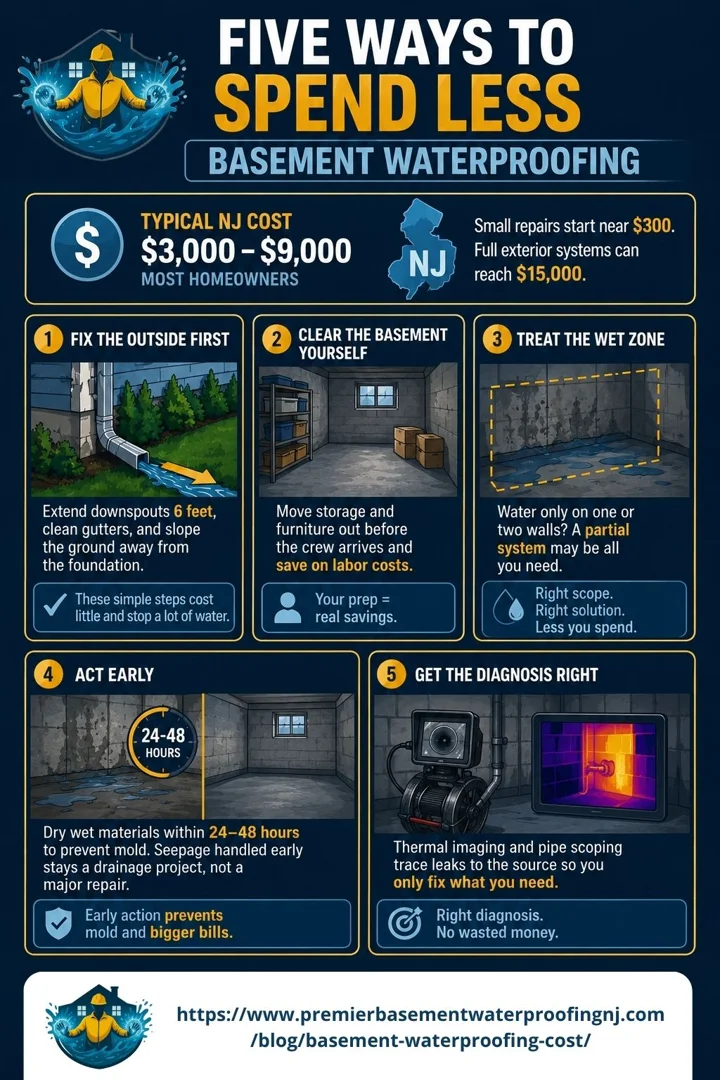
- Fix the outside first. Extending downspouts six feet from the foundation, clearing gutters, and sloping the ground away from the walls cost almost nothing and resolve a meaningful share of basement moisture. EPA moisture control guidance lists all three, along with keeping indoor humidity between 30 and 50 percent.
- Clear the basement yourself. Moving the storage and furniture out before the crew arrives saves hours you would otherwise pay for.
- Treat the wet zone. If water only comes in along one or two walls, a partial system may be all you need. An honest assessment tells you whether that is your situation.
- Act early. Drying wet materials within 24 to 48 hours generally prevents mold growth altogether, which is the EPA’s own window. Seepage handled at the first sign stays a drainage project, while the same water left alone grows into mold, framing damage, and foundation work.
- Get the diagnosis right. Thermal imaging and pipe scoping trace the leak to its source, which keeps you from paying for perimeter work you did not need.
Reading a Waterproofing Quote
Two quotes are comparable only when both spell out the same things. Look for these five in writing.
- Linear footage and system layout. The exact run of drainage, not a lump sum.
- Component specifications. Pipe diameter, stone type and depth, pump horsepower, pit size, and how thick the concrete is repoured.
- Warranty terms. What is covered, for how long, and whether it transfers to a future buyer.
- Permit responsibility. Which party pulls the township permit and schedules inspections.
- Exterior findings. Notes on grading, downspouts, and window wells. Someone who never walked outside cannot tell you whether interior work alone will hold.
New Jersey home improvement contractors register with the New Jersey Division of Consumer Affairs, and you will see that registration number on their advertising, contracts, and trucks. Registration requires proof of general liability insurance, and the Division runs an online verification system where you can check anyone’s status in a minute.
Get Your Exact Perimeter Quote Today!
Ranges only get you so far. Once someone measures your perimeter and finds where the water is actually coming in, the number stops being a range.
Premier Basement Waterproofing has worked in Monmouth County since 1996. Nelson Manso does every assessment himself, with thermal imaging and pipe scoping to find the source, and there is no commissioned salesperson in the middle taking a cut of your quote. Our neighbors have plenty to say about that in the reviews.
Explore our basement waterproofing services or book your inspection today.
