
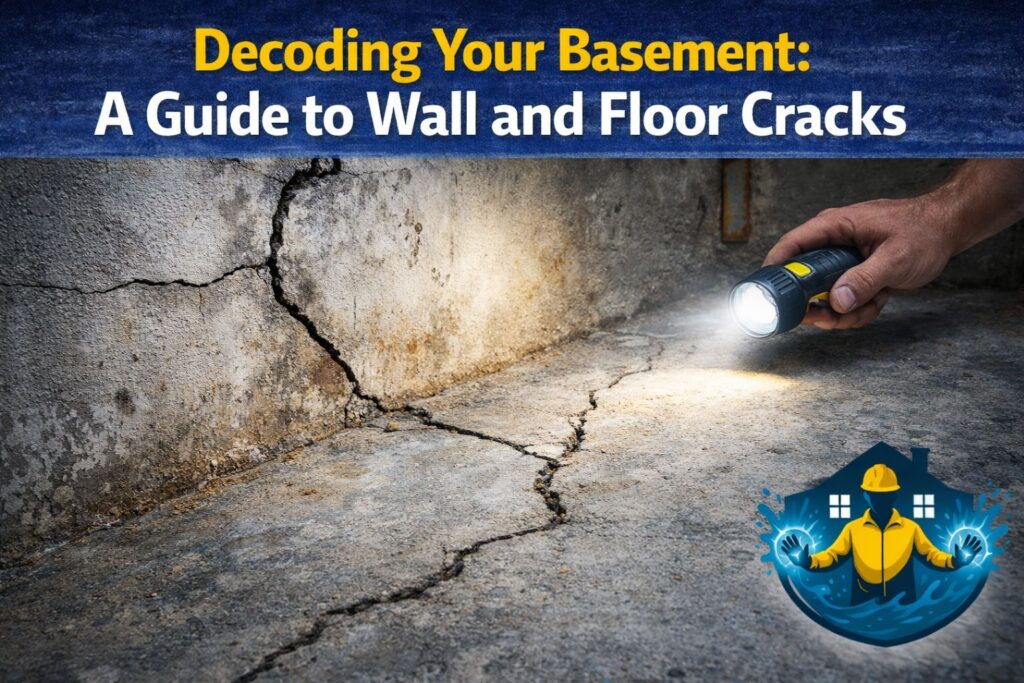
Decoding Your Basement: A Guide to Wall and Floor Cracks
Why Your Basement Deserves a Closer Look
Basement wall issues aren’t just cosmetic—they can be warning signs that your home’s foundation is compromised. If you see cracks, water stains, or bowing walls, here’s what you need to know.
Most Common Basement Wall Issues:
- Vertical Cracks – Usually harmless, caused by concrete shrinkage
- Horizontal Cracks – Serious concern, indicates soil pressure
- Water Stains/Efflorescence – Signs of moisture intrusion
- Bowing or Bulging Walls – Structural failure requiring immediate attention
- Diagonal/Stair-Step Cracks – Often indicate foundation settling
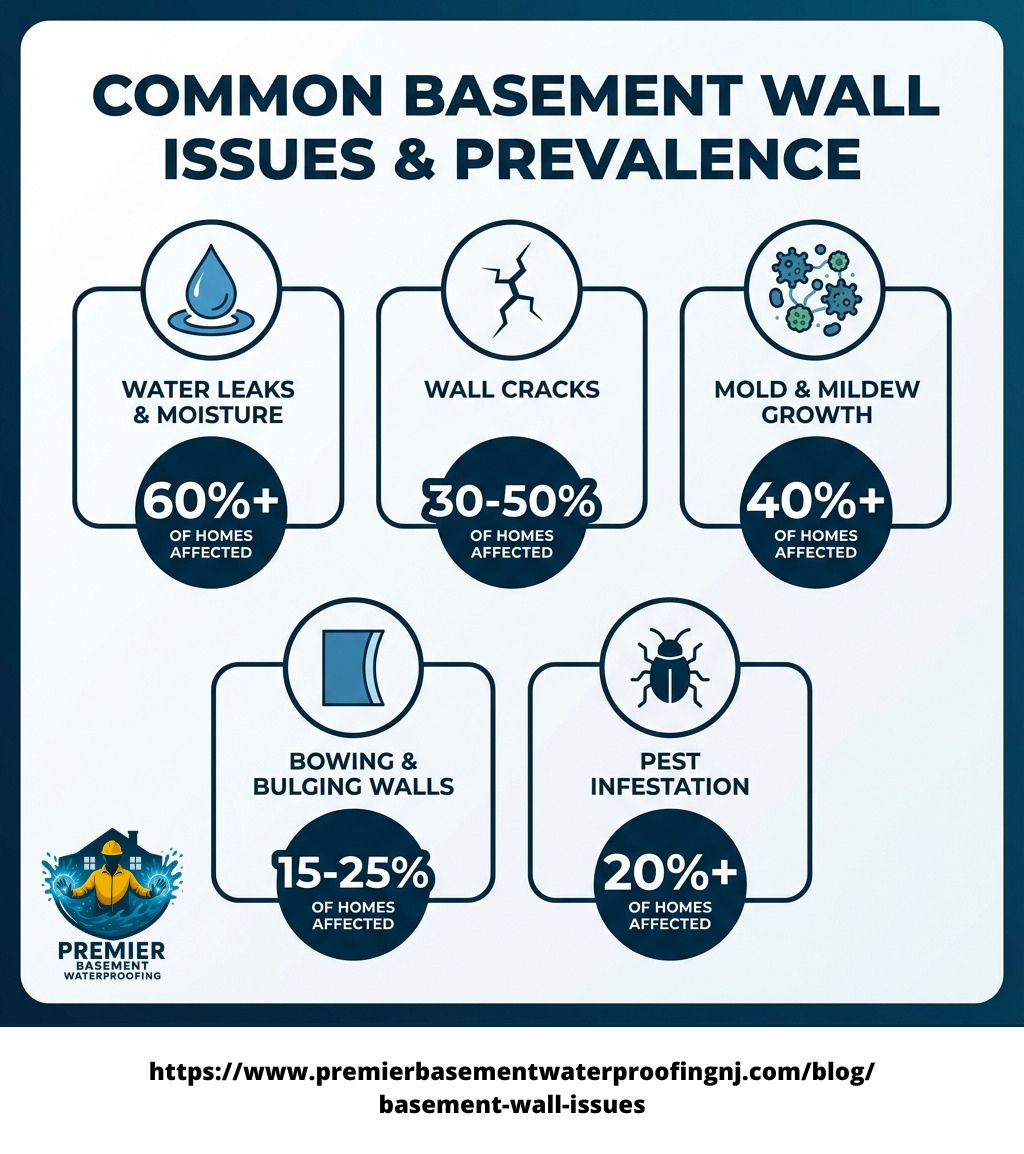
Your basement is below ground, surrounded by moist soil, making it vulnerable. In fact, over 60 percent of homes with basements experience water problems at some point.
Water is your home’s greatest enemy. When it gets through cracks or porous concrete, it can cause mold, structural damage, and lower your property value.
The good news is that most issues start small, giving you warning signs. Spotting them early can save you thousands in repairs and protect your investment.
I’m Nelson Manso, and I’ve spent 29 years diagnosing and repairing basement wall issues throughout Monmouth County—from hairline cracks to severe foundation failure. In this guide, I’ll walk you through what those cracks mean and when to take action.
Identifying Common Basement Wall Issues and Their Causes
As a Monmouth County homeowner, you might think a basement crack is “nothing serious.” While sometimes true, I’ve seen minor basement wall issues escalate quickly if ignored. Basements are below-grade, surrounded by moist soil, which sets the stage for many problems.
Decoding Wall Cracks: From Harmless to Hazardous
When I inspect a basement, I first look for cracks, the most common sign of underlying issues. But not all cracks are equal. Knowing the difference can save you worry or prompt you to call a professional.
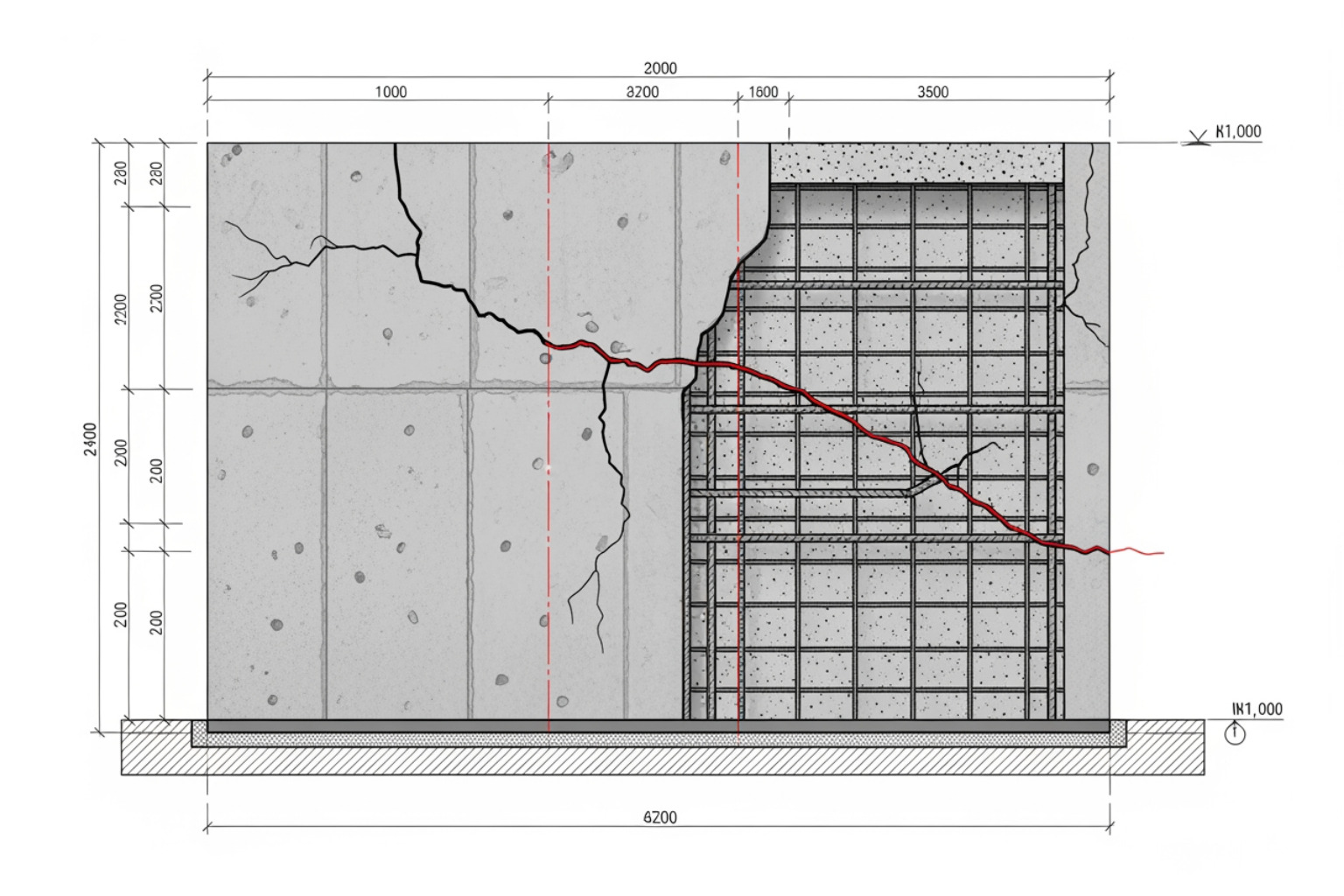
- Vertical Cracks: In poured concrete, vertical cracks under 1/8 inch wide are often from concrete shrinkage as it cures. They’re usually not severe. However, if they widen, leak, or appear in a block foundation, they need a closer look.
- Horizontal Cracks: These are almost always a serious concern. They indicate significant outside soil pressure pushing inward, caused by saturated soil, expansive clay, or New Jersey’s freeze-thaw cycle. If ignored, they can lead to bowing walls and compromise your foundation’s integrity.
- Diagonal Cracks: These often indicate differential foundation settling, where one part of the house settles faster than another. This can be caused by shifting soil, tree roots, or poor drainage.
- Stair-Step Cracks: Common in block or brick foundations, these follow mortar joints in a stair-step pattern. They are a classic sign of differential settlement or lateral pressure, suggesting significant wall stress.
Crack Width Matters: Pay attention to cracks wider than 1/8-inch. While hairline cracks can be benign, those wider than 1/4-inch are a concern and may indicate serious structural stress. For more insights, you can refer to resources like What To Know About Basement Foundation Wall Cracks.
The Telltale Signs of Water Intrusion
Water will always find a way into your basement. Even without standing water, subtle signs can indicate moisture problems, often the root cause of other basement wall issues.
- Hydrostatic Pressure: Groundwater creates “hydrostatic pressure” against your basement walls. When not drained properly, water accumulates in the soil, pressing on your foundation. This force can push water through cracks and pores or even cause walls to bow.
- Efflorescence (White Powder): A white, powdery substance on concrete or block walls is efflorescence. It’s mineral salts left behind by evaporating water and clearly indicates excess moisture in your walls.
- Water Stains: Dark, discolored patches on walls or floors indicate that water has been present.
- Musty Odors: Foul basement odors are usually caused by mold and mildew, which thrive in damp environments.
- Mold and Mildew: Dark stains or patches, often with a musty smell, indicate mold growth, a serious health concern.
- Chipped Paint: Humidity can cause paint to chip or peel as moisture pushes through the wall.
- Damp Drywall: In finished basements, damp or stained drywall indicates a waterproofing failure and can lead to mold behind the walls.
Addressing these signs is critical. Sometimes it’s a simple HVAC adjustment, but often it requires a robust system like our Sump Pumps to divert water away from your foundation.
Recognizing the Stages of Foundation Wall Failure
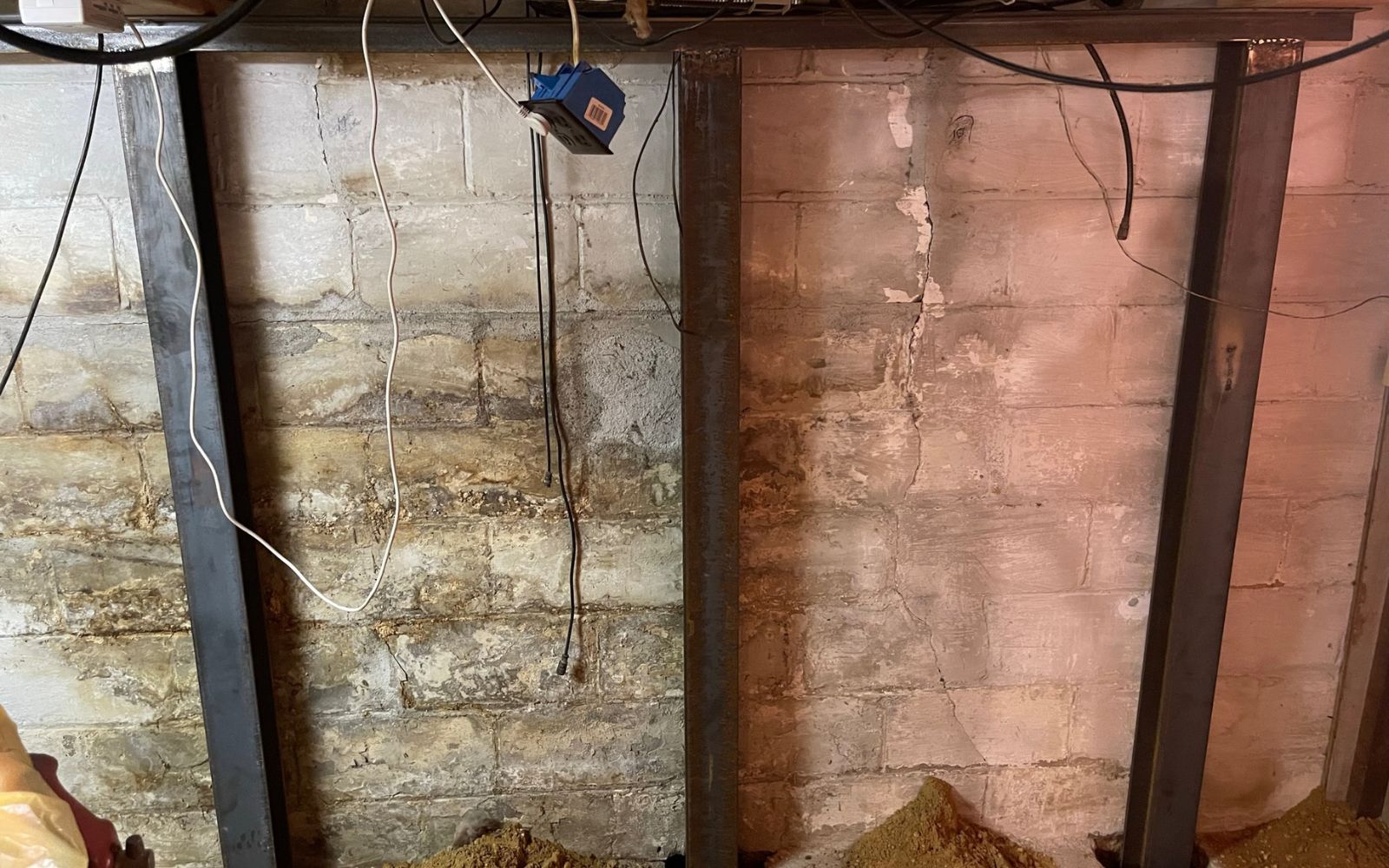
Foundation wall failure is progressive. A minor crack can evolve into major structural damage. Understanding the stages helps you intervene before it’s critical.
- Bowing or Bulging Walls: Noticeable inward bending of foundation walls is a serious issue. It occurs when outside soil pressure exceeds the wall’s capacity, signaling immense stress and loss of structural integrity.
- Wall Shearing: This is the horizontal movement of walls from outside soil pressure. The bottom of the wall stays put while the rest slides inward. It requires fast intervention.
- Leaning Walls: Often a sign of advanced failure, especially in poured concrete. Inward soil pressure can cause the top of the wall to lean in, indicating a severe loss of stability.
The way failure progresses differs by foundation type:
- Concrete Block Walls: Failure starts with a horizontal crack in the middle. Next, stair-step cracks appear at the corners. Then, the wall pushes in, shearing at the bottom. Total failure occurs when the top of the wall leans inward.
- Poured Concrete Walls: These walls tend to lean in at the top from outside pressure. The next stage is diagonal cracking at the corners. Total failure is reached when the wall continues to lean and cracks expand.
Foundation issues worsen over time, increasing damage and repair costs. As the University of Minnesota Extension notes, basements are below-grade and surrounded by moist soil, leading to higher humidity. This constant moisture is why vigilance is key. For more on this, refer to Moisture in basements: causes and solutions.
Your Action Plan: Repair, Prevention, and Professional Help
Understanding the signs of basement wall issues is the first step. The next is knowing what to do. My goal is to empower homeowners with knowledge to make informed decisions about protecting your investment.
Proactive Prevention: Protecting Your Foundation
Prevention is key for your home’s foundation. Many significant basement wall issues can be avoided with proper preventative measures.
- Gutter and Downspout Maintenance: Poor roof drainage is a common cause of wet basements. Keep gutters clean and ensure downspouts extend at least 10 feet from your foundation to divert thousands of gallons of water away.
- Proper Grading: The ground around your home should slope away from the foundation—at least 6 inches over the first 10 feet. If water pools near your house, it will get into your basement. This is crucial in areas like Freehold and Rumson with varied terrain.
- Soil Management: Expansive soils swell when wet and shrink when dry, creating pressure on foundation walls. Maintain consistent soil moisture and avoid over-watering near the foundation to prevent this.
- Tree Root Management: Roots from large trees planted too close can exert pressure and cause cracks. Consider the mature size of trees and shrubs when planting near your home.
Implementing effective Drainage Solutions is a critical step in preventing water damage.
Navigating Repair Options for Basement Wall Issues
The best repair approach depends on the problem’s type and severity. Here’s a look at common strategies:
| Repair Method | Best Use Cases | Cost Level |
|---|---|---|
| Epoxy/Polyurethane Injection | Seals minor, stable, non-structural vertical or diagonal cracks that leak water. | Minor |
| Carbon Fiber Straps | Stabilizes cracked or bowed walls moving inward. Strong carbon fiber is applied internally to prevent further bowing without major excavation. | Moderate |
| Wall Anchors (GeoLock) | Stabilizes bowing or leaning walls. Anchors are installed in stable soil outside and connected to interior plates for gradual straightening. | Moderate |
| Helical Piers | Supports and levels foundations with differential settlement. Piers are driven to stable soil to lift and stabilize the compromised section. | Significant |
| Underpinning | Strengthens the foundation by extending it to deeper, more stable soil. Used for severe settlement. | Significant |
| Wall Reconstruction | For extremely bowed, sheared, or damaged walls. This is the most extensive and involved repair option. | Significant |
Schedule a professional assessment to determine the best repair option for your home.
When to Call a Professional for Your Basement Wall Issues
While some minor fixes are DIY, foundation issues require a professional. Delaying action on serious basement wall issues can have severe consequences.
- DIY Limitations: A homeowner can patch minor, non-leaking hairline cracks. But leaking cracks, those wider than 1/8-inch, or cracks showing movement require an expert. DIY structural repairs can mask the problem, leading to costlier fixes later.
- Signs of Serious Structural Issues: Call an expert if you see:
- Bowing or leaning basement walls.
- Horizontal cracks, especially if widening.
- Stair-step cracks in block foundations.
- Cracks that reappear after repair.
- Any cracks actively leaking water.
- Sticking doors and windows.
- Sagging or uneven floors.
- Gaps around window frames or exterior doors.
- Ignoring Damage Consequences: Ignoring basement wall issues can lead to:
- Further structural damage, including collapse.
- Increased water intrusion and potential flooding.
- Mold proliferation and health risks.
- Uneven foundation settlement.
- Higher repair costs down the road.
- Decreased home value.
- Importance of Prompt Action: Prompt intervention is crucial. Shearing, for example, requires fast action to prevent further damage. Modern repair methods mean even serious issues don’t always require a full overhaul.
At Premier Basement Waterproofing, we offer honest solutions for Monmouth County homeowners. We provide custom, no-pressure services focused on education and fair pricing, backed by our guarantee. We’re here to solve foundational challenges with expertise. Don’t let basement wall issues compromise your home’s safety and value. Contact Us for a no-pressure foundation repair assessment today for your free inspection.
