

Silence the Sump: Replacing Your Noisy Check Valve for a Quieter Home
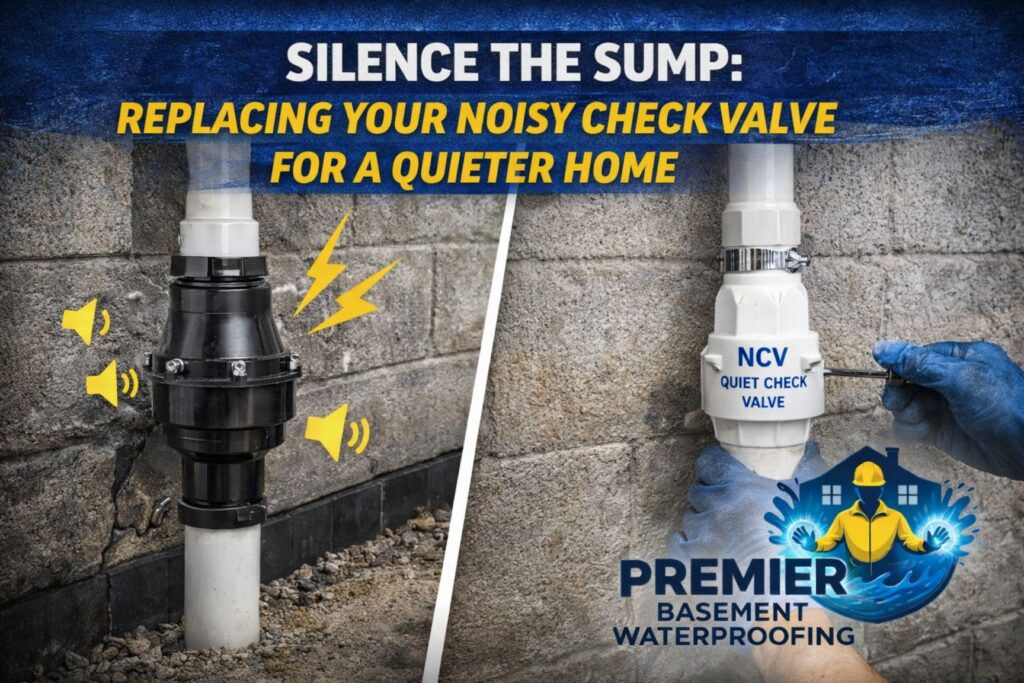
Why a Quiet Basement Starts with a Functioning Check Valve
Sump pump check valve replacement is a straightforward DIY project that can eliminate loud banging noises, prevent your pump from working overtime, and protect it from premature failure. Most homeowners can do this in under two hours with basic tools and a new valve costing $15 to $75.
Quick Answer: How to Replace a Sump Pump Check Valve
- Unplug the pump and drain the sump pit
- Measure your discharge pipe (usually 1.25″ or 1.5″ diameter)
- Purchase the right valve (consider a “silent” or “quiet” model)
- Cut out the old valve section from the discharge pipe
- Install the new valve using PVC primer and cement, ensuring the arrow points away from the pump
- Add a weep hole 2-3 inches above the valve if not present
- Test the system by filling the pit with water
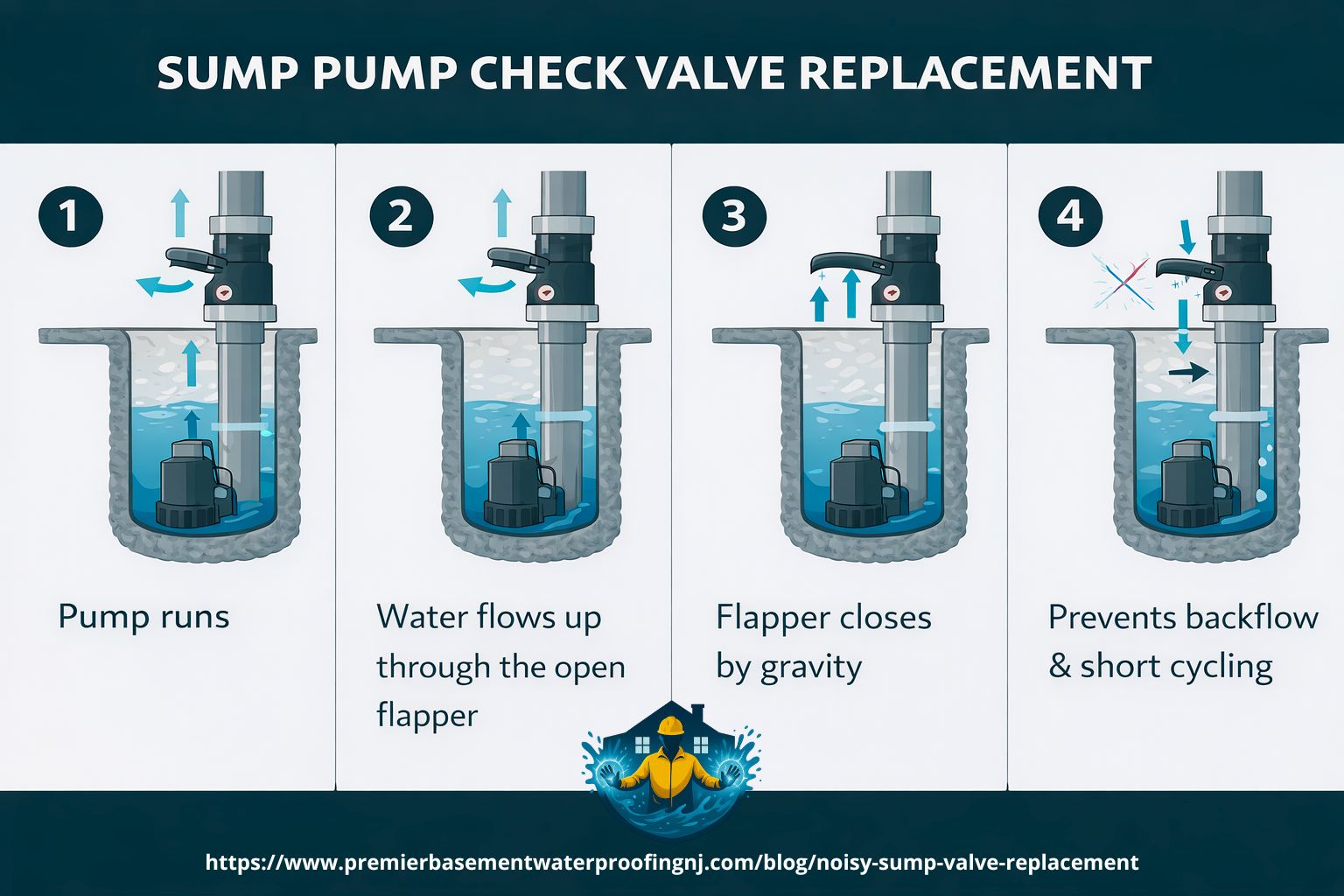
Without a working check valve, water flows back into the sump pit after your pump shuts off. This causes the pump to turn on, push water up, shut off, and then the water falls back down, creating a loud “thump” or “hammer” sound.
This backflow also forces your pump to move the same water repeatedly, a problem called short cycling. This makes the motor run hotter and work harder, shortening its lifespan and increasing the risk of failure. A simple check valve replacement stops this backflow, reduces noise, cuts electricity costs, and extends your pump’s life.
I’m Nelson Manso, and with 29 years of experience in basement waterproofing in Monmouth County, I’ve seen how a failing check valve causes noisy, inefficient sump pumps. Through thousands of sump pump check valve replacements, I’ve learned the best techniques for a quiet, reliable installation.
Your Step-by-Step Guide to Sump Pump Check Valve Replacement
As a homeowner in Monmouth County, I know a noisy sump pump can be a constant annoyance and a signal of potential water damage. This section provides a complete walkthrough of the sump pump check valve replacement process, from identifying the problem to testing your new, quiet valve.
Signs You Need a Sump Pump Check Valve Replacement & Choosing the Right One
Recognizing the signs of a failing check valve is key to preventing bigger issues.
Signs Your Check Valve Needs Replacing:
- Loud Thumping Noise (Water Hammer): A distinct “thump” or “bang” when your pump shuts off is the sound of water rushing back down the pipe. This is a clear sign the valve isn’t closing properly.
- Pump Short Cycling: If your pump turns on and off in rapid succession, it’s short cycling. This happens because water drains back into the pit, re-triggering the pump, wasting energy, and causing premature wear.
- Pump Runs Constantly: A failing valve can contribute to a pump that runs non-stop, increasing energy use and wearing out the motor.
- Visible Leaks or Cracks: If you see water seeping from the valve itself, it’s time for a sump pump check valve replacement.
- When Replacing Your Sump Pump: I always recommend replacing the check valve when installing a new sump pump. It’s a small step that ensures optimal performance for your new pump.
A check valve’s lifespan is typically 5-10 years. It’s wise to inspect it annually and replace it if any of the above signs appear.
Choosing the Right Check Valve:
- Swing Check Valves: Basic and affordable, but can be noisy.
- Spring-Loaded Check Valves: Use a spring for a quieter, more reliable closure.
- “Silent” or “Quiet” Check Valves: My recommendation for homeowners. They use a spring-assisted design to close softly, virtually eliminating water hammer.
The most important factor is matching the valve to your discharge pipe size, usually 1-1/4 inch or 1-1/2 inch. Measure the outside diameter to confirm. You can find suitable PVC, ABS, or thermoplastic valves at local hardware stores, plumbing supply centers, or online. For more guidance, this article will assist you in the selection process.
Tools and Materials for the Job
Gathering your tools and materials beforehand will make the sump pump check valve replacement process much smoother.
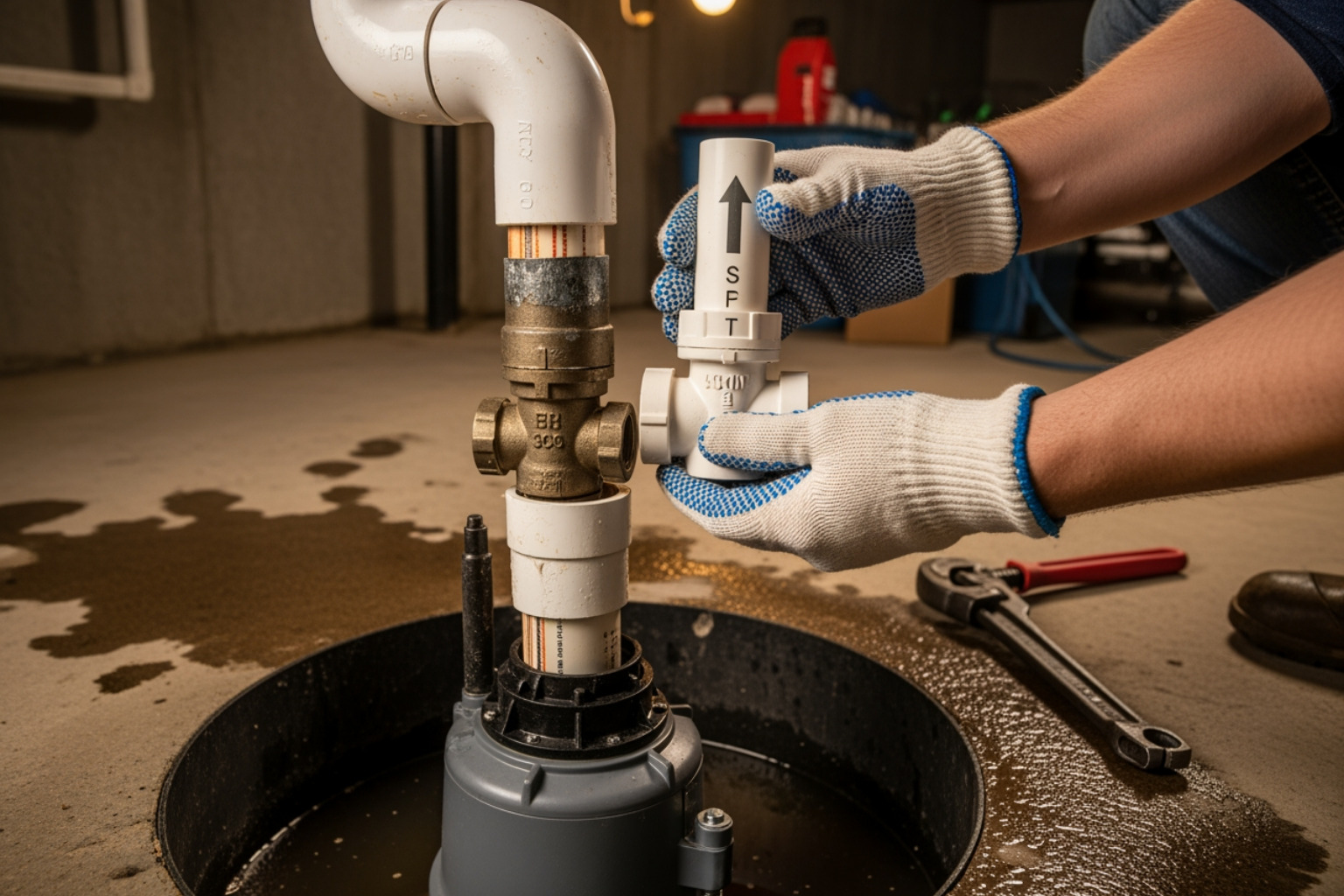
Here’s my checklist:
- New Check Valve: Correct size and type for your system.
- PVC Primer & Cement: For bonding PVC pipes and fittings.
- Pipe Cutter or Hacksaw: A PVC cutter provides cleaner cuts.
- Measuring Tape
- Sandpaper (180-grit): To smooth cut pipe edges.
- Bucket & Rags: For catching water and cleanup.
- Safety Glasses
- Permanent Marker
- Drill with a 3/16″ Bit: For drilling the weep hole.
The 7-Step Sump Pump Check Valve Replacement Process
Follow this how-to guide to effectively replace your sump pump check valve for a quieter basement.
Step 1: Safety First – Unplug the Pump
This is non-negotiable. Before touching anything, unplug the sump pump from the electrical outlet.
Step 2: Drain the Pit (if necessary)
If there’s water in the pit, let the pump run one last time. If it’s not working, remove the water manually with a bucket or utility pump.
Step 3: Measure and Mark the Pipe
Locate the old check valve or choose a spot for the new one, ideally 8-18 inches above the pump’s discharge outlet. Measure the length of your new valve assembly. Mark the section of the discharge pipe you need to remove. Remember: “Measure twice, cut once.”
Step 4: Cut the Pipe and Remove the Old Valve
Place a bucket under your cut marks to catch residual water. Use a pipe cutter or hacksaw to cut the pipe. If the old valve is cemented, you may need to gently heat the PVC to loosen it. If it’s clamped, just loosen the clamps. Use sandpaper to smooth the cut edges.
Step 5: Dry-Fit the New Valve
Before using adhesive, test-fit the new valve and couplings. This ensures everything fits correctly.
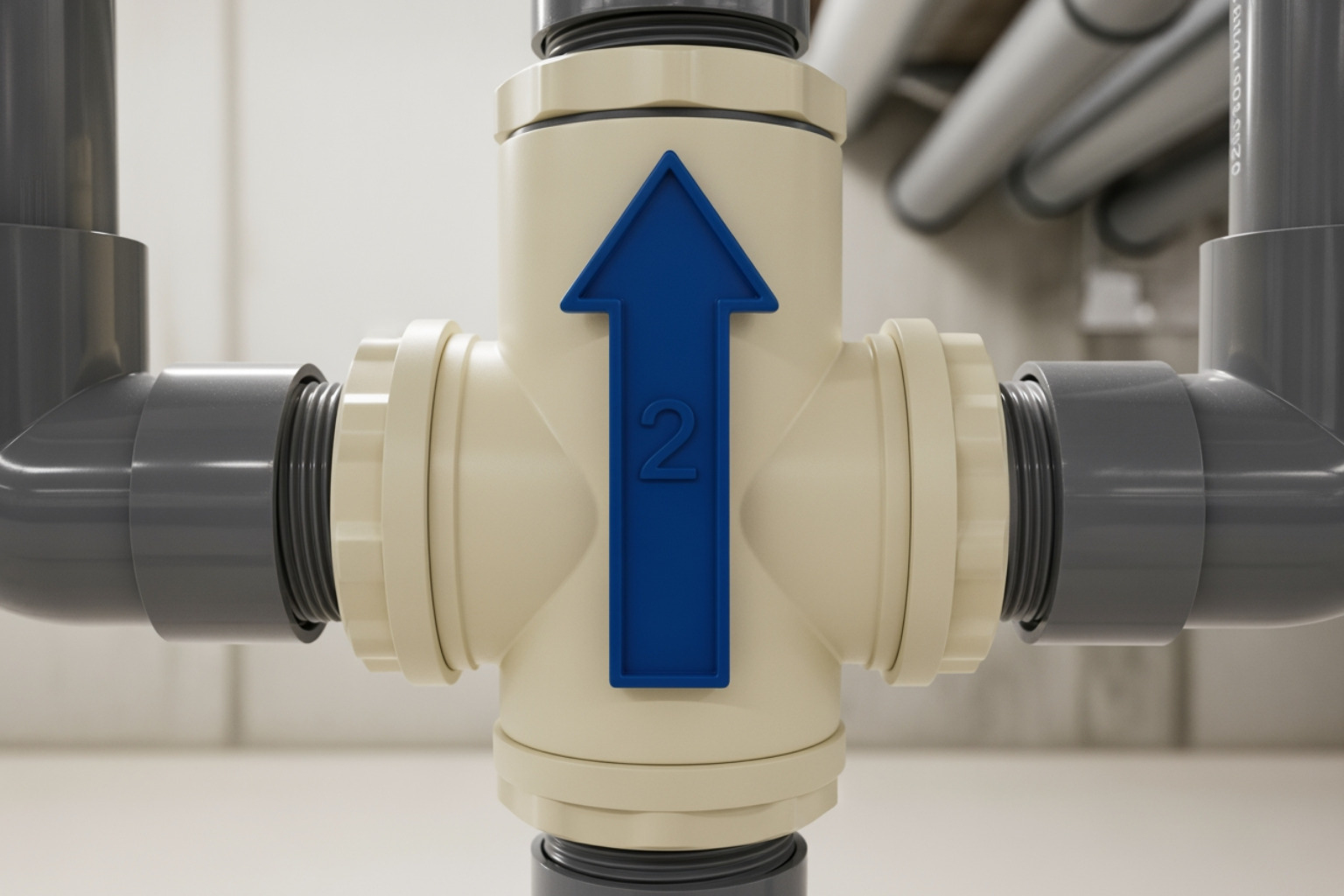
Crucially, ensure the flow arrow on the check valve points upward – away from the pump. If installed backward, it will block water flow.
Step 6: Apply Primer and Cement
Apply PVC primer to the outside of the pipe ends and the inside of the valve’s connection points. Quickly follow with an even coat of PVC cement on the same surfaces. Firmly push the valve onto the pipe, twisting slightly, and hold for 30 seconds. For clamped connections, tighten the screws until snug.
Step 7: Install the Weep Hole and Test the System
To prevent “air lock” (trapped air that stops the pump from moving water), drill a 3/16″ weep hole in the discharge pipe, about 2-3 inches above the new valve. Angle the hole slightly downward. If your valve threads directly into the pump, drill the hole in the valve body above the threads and below the flapper.
After the cement cures for at least 2 hours, plug the pump in. Pour water into the pit to activate it. Check for leaks and listen. The absence of a loud thud means you’ve successfully completed your sump pump check valve replacement!
Common Mistakes to Avoid:
- Wrong Flow Direction: The arrow must point up, away from the pump.
- Skipping the Weep Hole: This can cause air lock and burn out your pump motor.
- Installing the Valve Too High: This allows too much water to drain back into the pit.
- Poor Pipe Support: Ensure the pipe is properly supported to prevent stress on the new connections.
- Using the Wrong Size Valve: Always match the valve to your pipe diameter.
When to Call the Pros for Your Basement System
While a check valve replacement can be a satisfying DIY task, some situations and the overall health of your Basement Waterproofing system are best left to experts. Understanding when to call for professional help ensures your home remains protected, especially in Monmouth County where heavy rains are a concern.
How a Check Valve Protects Your Pump
A check valve is the unsung hero of your basement’s flood prevention system. Stopping water from flowing back into the pit prevents “short cycling”—the constant on-off cycle that overheats the motor and causes premature failure. This simple component is vital for your pump’s health and efficiency.
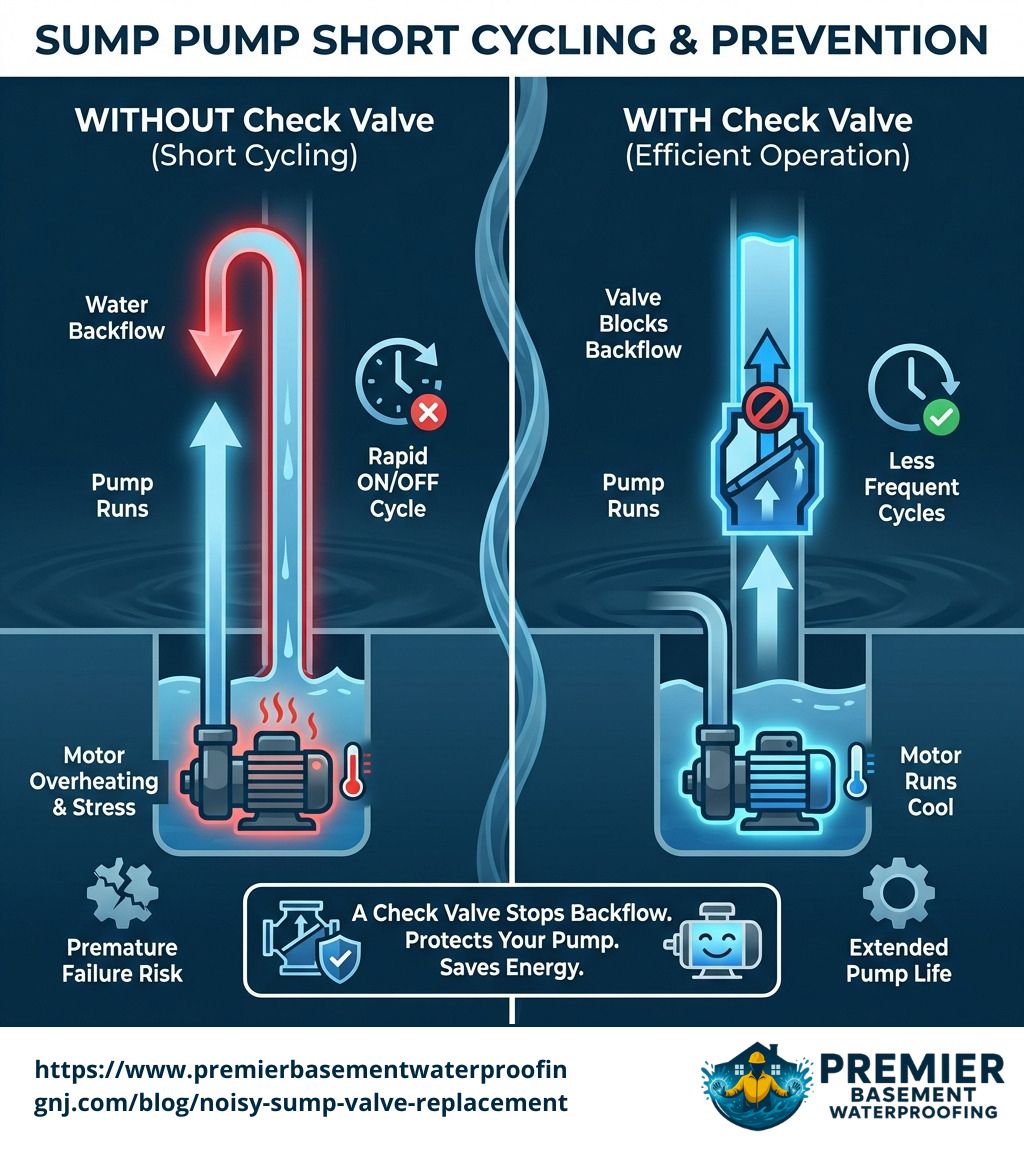 Stopping
Benefits of a Properly Functioning Check Valve:
- Increased Pumping Efficiency: The pump only moves water once, not over and over.
- Reduced Electricity Costs: Less frequent operation means lower energy bills.
- Prolonged Pump Life: Preventing short cycling significantly extends your pump’s lifespan.
- Minimized Noise: Eliminates the annoying “water hammer” sound for a quieter home.
A properly installed check valve is a key part of effective Drainage Solutions for your home.
Expert Help for a Dry and Quiet Basement
While I’ve outlined the DIY steps for a sump pump check valve replacement, some situations are best left to professionals.
When to Seek Professional Assistance:
- Complex Systems: Dual pumps, battery backups, or sewage ejector pumps require expert knowledge.
- Difficult Access: If your discharge line is hard to reach or has an unconventional setup.
- Uncomfortable with Plumbing: If you’re not confident in your skills, it’s better to have the job done right.
- Electrical Work: Any work beyond unplugging the pump should be handled by a qualified professional.
- Underlying Issues: If problems persist after replacement, a pro can diagnose the root cause.
- Code Compliance: Professionals ensure your system meets local building codes in Monmouth County.
At Premier Basement Waterproofing, we provide honest, transparent basement waterproofing solutions. We believe in educating homeowners, offering fair pricing, and guaranteeing our work. We’ve performed thousands of sump pump check valve replacements and comprehensive installations, always focusing on long-term protection.
For a comprehensive evaluation of your system or if you’re experiencing persistent sump pump issues, learn more about our Sump Pumps and how we can help keep your Monmouth County basement dry and quiet. We’re here to ensure your home’s safety and comfort.
Don’t let a noisy sump pump compromise your peace of mind. Whether you DIY the sump pump check valve replacement or call in the experts, taking action is the best way to safeguard your basement.
