
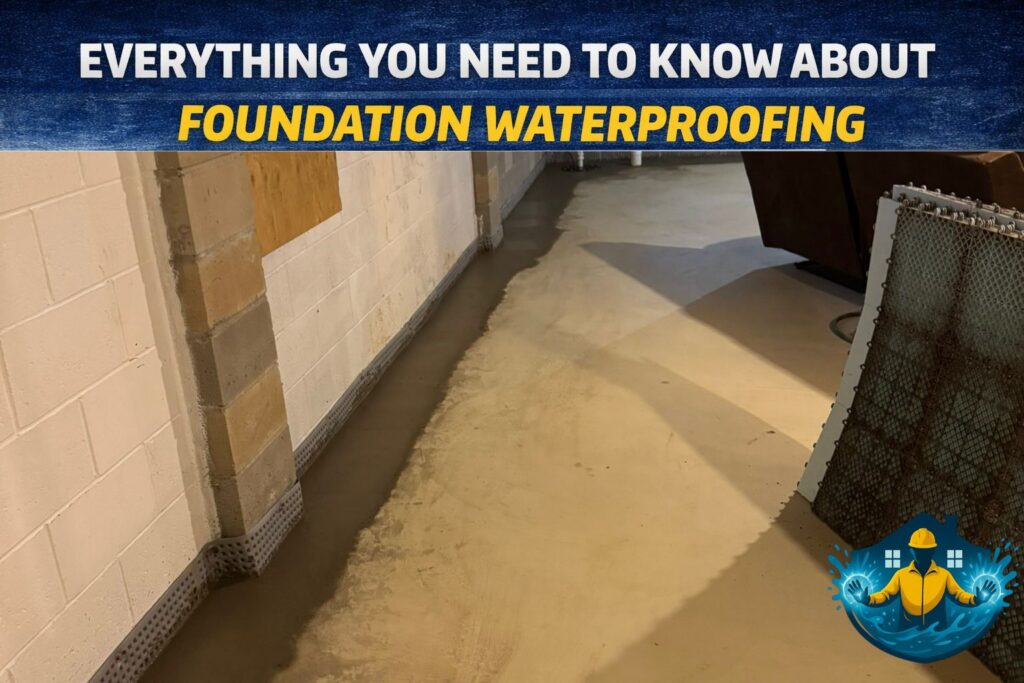
Everything You Need to Know About Foundation Waterproofing
Why Foundation Waterproofing Protects Your Home’s Structural Integrity
Foundation waterproofing is the process of protecting your home’s foundation from water intrusion. By creating barriers and managing drainage, it prevents moisture from entering your basement or crawl space, safeguarding your home’s structural integrity.
Water is the leading cause of foundation problems. Saturated soil creates hydrostatic pressure, forcing water through concrete and cracks. Common signs of trouble include musty odors, damp spots or stains on basement walls, peeling paint, and visible cracks. Ignoring these issues can lead to mold, structural damage, and reduced property value.
Effective solutions range from exterior membranes and interior drainage systems to crack repair and proper grading. The goal is to manage both surface water and groundwater before they can cause harm.
I’m Nelson Manso, and I’ve been providing foundation waterproofing solutions to homeowners in Monmouth County for 29 years. My approach focuses on identifying the root cause of water intrusion and implementing permanent solutions to protect your home.
Core Concepts of Foundation Waterproofing
When I consult with homeowners in Monmouth County, I emphasize understanding the principles behind foundation waterproofing. It’s not just stopping a leak; it’s creating a comprehensive defense system for your home.
Why Your Foundation Needs Protection: Signs and Consequences
Water relentlessly seeks the path of least resistance, and your below-grade basement is often its target. Being vigilant about the signs of water intrusion can save you significant expense and headaches.
Key Signs of Foundation Water Intrusion:
- Efflorescence: A white, powdery substance on basement walls, indicating water is passing through the concrete.
- Musty Odors & Dampness: A persistent musty smell points to mold or mildew, while damp spots, peeling paint, or visible stains confirm water seepage.
- Cracks and Structural Shifts: Cracks in foundation walls or floors, along with sticking doors or windows, can signal foundation movement caused by water pressure.
- Water Pooling: Puddles on the floor or water collecting near your foundation after rain are clear signs of a problem.
Consequences of Inadequate Waterproofing:
Ignoring these signs can lead to severe consequences, including mold growth that affects your family’s health, and structural damage like bowing walls or foundation settlement. A home with water issues will also suffer from reduced property value and poor indoor air quality. For severe issues, you may need comprehensive Foundation Repair solutions.
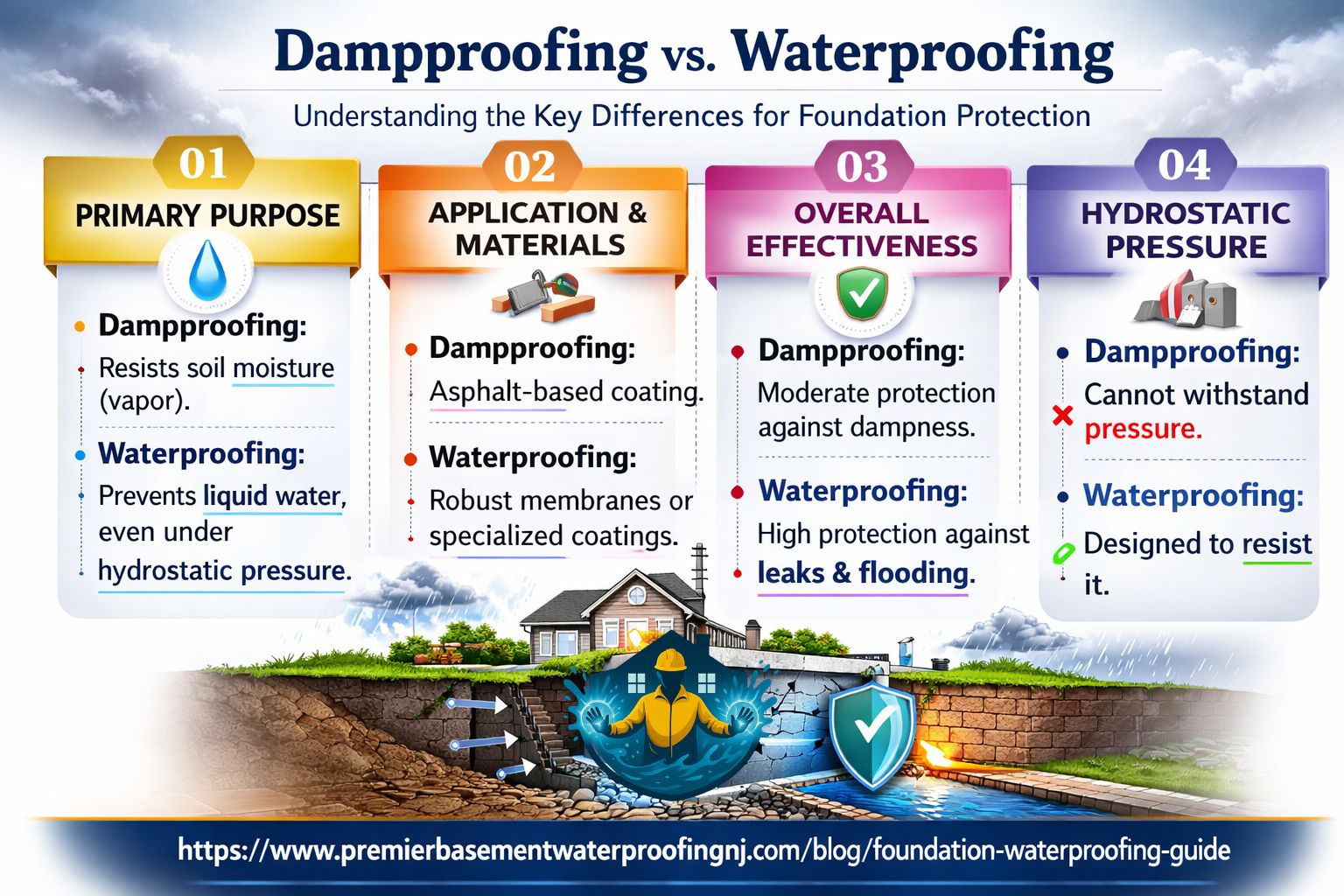
Dampproofing vs. Waterproofing: Understanding the Difference
It’s crucial to understand the difference between dampproofing and true waterproofing.
- Dampproofing: This is typically an asphalt-based coating applied during construction to resist moisture from damp soil. While often required by building codes, such as in the 2021 International Residential Code (IRC) Section R406, it is not designed to stop liquid water under pressure.
- Waterproofing: This is a more robust system designed to create an impermeable barrier that stops liquid water, even under significant hydrostatic pressure. It is essential for preventing leaks and protecting the foundation’s structural integrity.
This table highlights the key differences:
| Feature | Dampproofing | Waterproofing |
|---|---|---|
| Purpose | Resists soil moisture (vapor) | Prevents liquid water under hydrostatic pressure |
| Application | Sprayed or rolled coating (e.g., asphalt) | Membranes (sheet, liquid-applied), specialized coatings |
| Effectiveness | Moderate, prevents dampness | High, prevents leaks and flooding |
| Cost | Generally lower | Generally higher |
| Durability | Less durable, can degrade over time | More durable, designed for long-term performance |
| Hydrostatic Pressure | Does not withstand | Designed to withstand |
Exterior Waterproofing: The Comprehensive Process
Exterior waterproofing is the gold standard for stopping water before it reaches your foundation. It’s a comprehensive process that creates a robust barrier around your home.
The key steps include:
- Excavation: We carefully excavate the soil around the foundation down to the footing to expose the walls.
- Preparation and Repair: The walls are cleaned, and any cracks or holes are repaired to create a smooth, stable surface.
- Membrane Application: A waterproof membrane (liquid-applied or sheet membrane) is applied to the foundation walls to create an impermeable barrier.
- Protection and Backfilling: A drainage mat or protection board is installed over the membrane, and the area is carefully backfilled with granular material to promote drainage. Then, the soil is graded to slope away from the house.
This method is highly effective but involves significant excavation, making it ideal for new construction or as a permanent solution for existing homes with persistent water problems.
Interior vs. Exterior Systems: Which is Right for You?
Choosing between an interior and exterior system depends on your specific situation, budget, and the severity of the water intrusion.
Exterior Waterproofing
- Pros: Stops water before it enters, protects the foundation’s structure, and is highly effective.
- Cons: High cost, disruptive to landscaping due to major excavation.
Interior Waterproofing
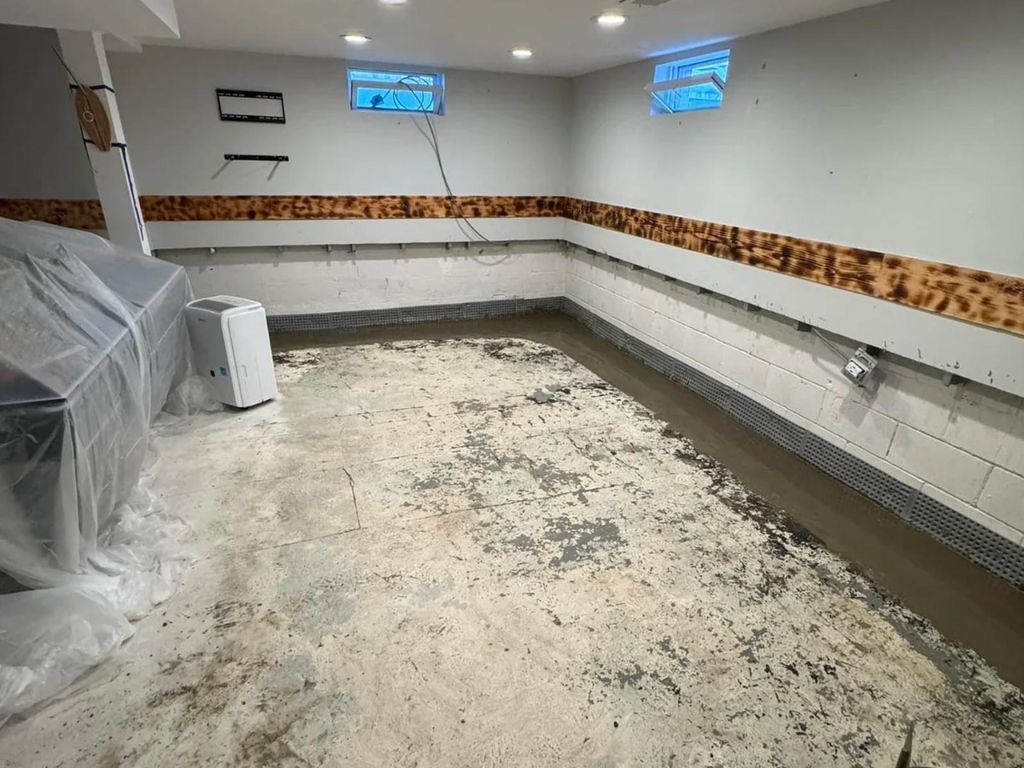
- Pros: More economical, less disruptive, and effectively manages water that has already entered the basement.
- Cons: Manages water rather than stopping it from entering the foundation walls, meaning the foundation is still exposed to hydrostatic pressure. Relies on a sump pump.
Interior systems are a popular and effective choice for managing existing water problems. You can Learn about Interior Waterproofing Systems and the importance of reliable Sump Pumps to complete the system.
Often, a combination of methods provides the most comprehensive protection for your home.
Planning Your Waterproofing Project
Once you understand the core concepts, the next step is planning. A successful foundation waterproofing project relies on meticulous planning, proper drainage, and effective landscaping.
Essential Drainage and Landscaping Strategies
An effective foundation waterproofing plan must manage both surface water and groundwater. The goal is to reduce hydrostatic pressure (the force of water-saturated soil) and prevent capillary action (water wicking through concrete).
Key strategies include:
- Proper Yard Grading: The ground should slope away from your foundation for at least 10 feet to direct surface water away.
- Gutters and Downspout Extensions: Ensure downspouts discharge water at least 10 feet from your home to prevent soil saturation near the foundation.
- Drainage Systems: Footing drains and French drains are perforated pipes installed in gravel-filled trenches to collect and redirect groundwater away from the foundation. These are critical for managing subsurface water. Our Drainage Solutions offer comprehensive options.
- Window Well Drains: Properly installed window wells with drainage prevent water from pooling and leaking through basement windows.
- Vapor Barriers: A Vapor Barrier installation on interior walls and floors prevents moisture vapor from seeping through porous concrete.
Combining these techniques significantly reduces the amount of water that reaches your foundation.
Costs, Safety, and Final Considerations for Foundation Waterproofing
A waterproofing project is a significant investment in your home’s health and value. Understanding the key factors will help you plan effectively.
Cost and Value
The cost of foundation waterproofing varies based on project size, the method chosen (exterior vs. interior), and the condition of your home. While it can be a substantial investment, with the national average cost for basement waterproofing ranging from a few thousand to over ten thousand dollars, it is far less than the potential cost of structural repairs and mold remediation. A dry basement also increases your home’s usability and market value.
Safety Considerations
Safety is non-negotiable. Professional contractors must follow strict protocols, especially concerning excavation hazards (trench collapse, utility lines) and the safe handling of chemical waterproofing materials. This is not a DIY job.
Soil Type and Contractor Choice
The soil around your home—whether it’s dense clay that holds water or sandy soil that drains quickly—will influence the best waterproofing strategy. Because of this complexity, choosing the right contractor is critical. Look for an experienced, transparent company that educates you on the best solutions for your specific problem.
At Premier Basement Waterproofing, we pride ourselves on providing custom, no-pressure solutions to homeowners throughout Monmouth County, including towns like Freehold, Colts Neck, Rumson, and Howell. We focus on identifying the root cause of your water intrusion and offering fair pricing for permanent solutions.
My goal is to give you peace of mind. If you’re experiencing any signs of water intrusion, don’t wait. Get a comprehensive and permanent solution with our basement waterproofing services. Call us at (732) 720-1071 to schedule your inspection.
