
Is Your Basement Wall Bowing? Here’s How to Straighten Things Out
Understanding the Structural Warning Signs in Your Foundation
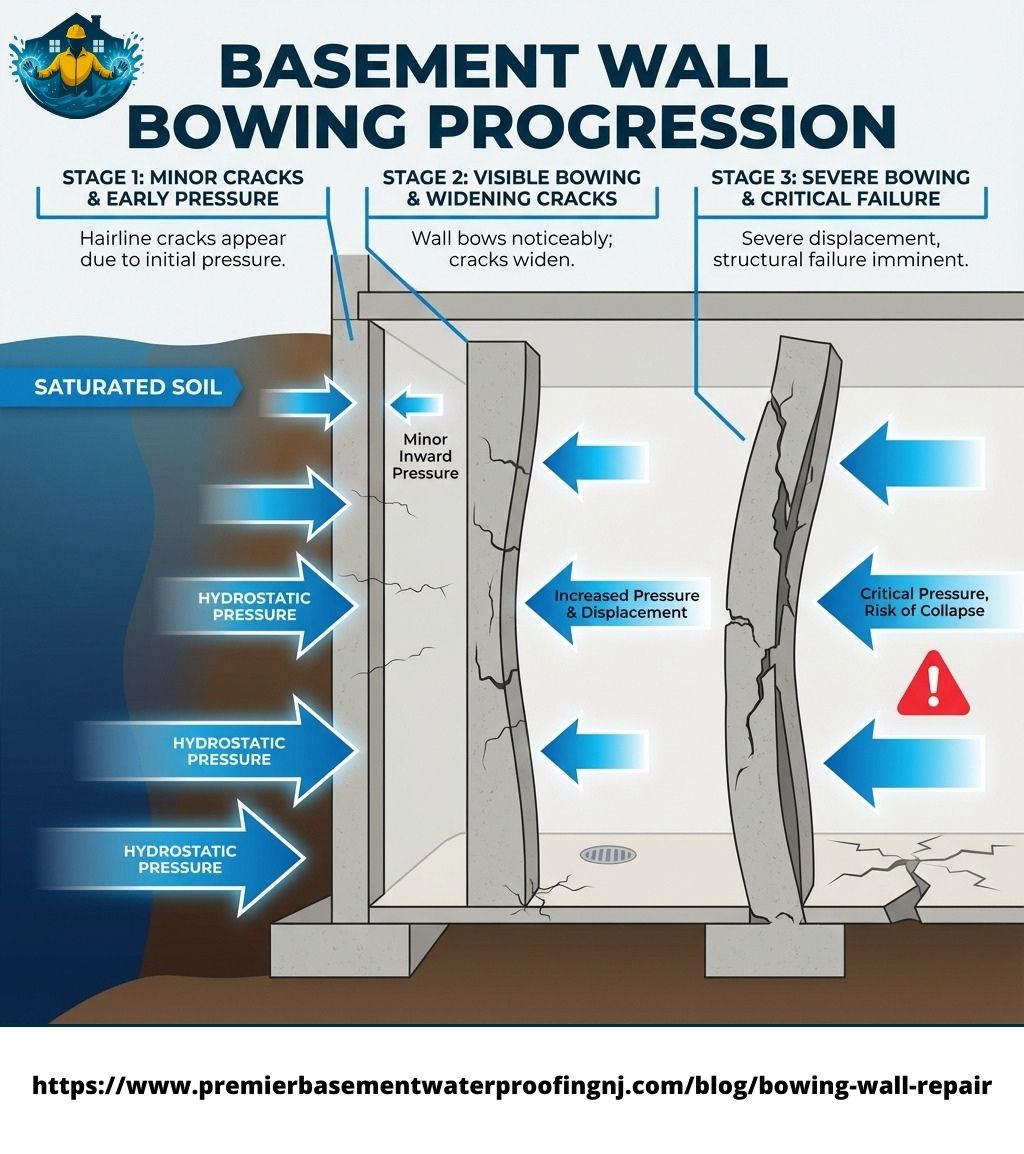
If you’ve noticed your basement walls curving inward, you’re dealing with more than a cosmetic issue. Bowing walls signal serious structural failure that will only worsen over time. This problem often starts with a horizontal crack or a visible bulge, indicating immense external pressure on your foundation.
The primary culprit is hydrostatic pressure. When water-saturated soil pushes against your walls, it creates a powerful lateral force they weren’t designed to handle. This pressure comes from poor drainage, heavy rain, or a high water table, causing the soil to become incredibly heavy.
Without proper bowing wall repair, the cracks widen, the bow deepens, and the wall can eventually collapse. This creates a dangerous situation and leads to far more expensive repairs than addressing the problem early.
I’m Nelson Manso, and with 29 years of experience in foundation repair and basement waterproofing in Monmouth County, I’ve helped countless homeowners fix bowing walls. This guide will explain what’s happening to your foundation and how to secure it permanently.
What Are Bowing Walls? Signs, Causes, and Dangers
Bowing walls are foundation walls, typically in basements, that curve or bend inward. This serious structural problem occurs when external soil pressure compromises the wall’s integrity, putting your home’s foundation under immense stress. It’s common in homes with concrete block, brick, or poured concrete foundations.
Signs and Symptoms of Bowing Walls
Catching the problem early is key to a less invasive and more affordable solution. Look for these signs:
- Horizontal Cracks: A long crack across the middle of the wall is a classic sign. Stair-step cracks in block walls are also common.
- Bulging Walls: The wall is visibly curving or bulging inward.
- Water Intrusion: Cracks and gaps allow water to seep into your basement, causing dampness and musty odors.
- Walls Leaning In: The top or bottom of the wall may tilt or slide inward.
- Gaps: Noticeable gaps may form between the wall and the floor or ceiling joists.
- Sticking Doors and Windows: Foundation movement can cause doors and windows throughout the house to stick.
The Risks of Ignoring Bowing Walls
Ignoring a bowing wall is a risk to your home’s value and your family’s safety. The problem will only worsen, leading to more severe structural damage, potential wall collapse, and significantly higher repair costs. As walls bow, they also create entry points for water, leading to mold and rot and unhealthy living conditions. Timely repair protects your investment by preventing structural damage and water intrusion that can compromise your home over time.
What Causes Bowing Walls?
Understanding the root cause is crucial for effective bowing wall repair. The primary culprits include:
- Hydrostatic Pressure: The most common cause. Water-saturated soil expands and pushes against the foundation.
- Expansive Clay Soil: Clay soils absorb water, expand, and then shrink when dry, putting constant stress on foundation walls.
- Frost Heave: In cold weather, frozen, expanding soil can exert tremendous pressure on the foundation.
- Poor Drainage: Clogged gutters, downspouts, or improper grading cause water to pool near the foundation, leading to saturated soil.
- Poor Construction: In some cases, the foundation may have been inadequately designed or constructed to handle regional soil pressures.
A Homeowner’s Guide to Effective Bowing Wall Repair
Yes, bowed walls can be fixed, but it is crucial to address the problem early to prevent further damage. Simply patching cracks will not solve the underlying issue of pressure against the foundation. The key is to stabilize the walls and reduce the external pressure causing them to bow. The goal of bowing wall repair is to achieve permanent stabilization and prevent further inward movement. Choosing the right method depends on the severity of the bow, foundation type, and property access. For comprehensive solutions, remember to check out our offerings for more info about Basement Waterproofing.
Carbon Fiber Straps: A Modern, Minimally Invasive Solution
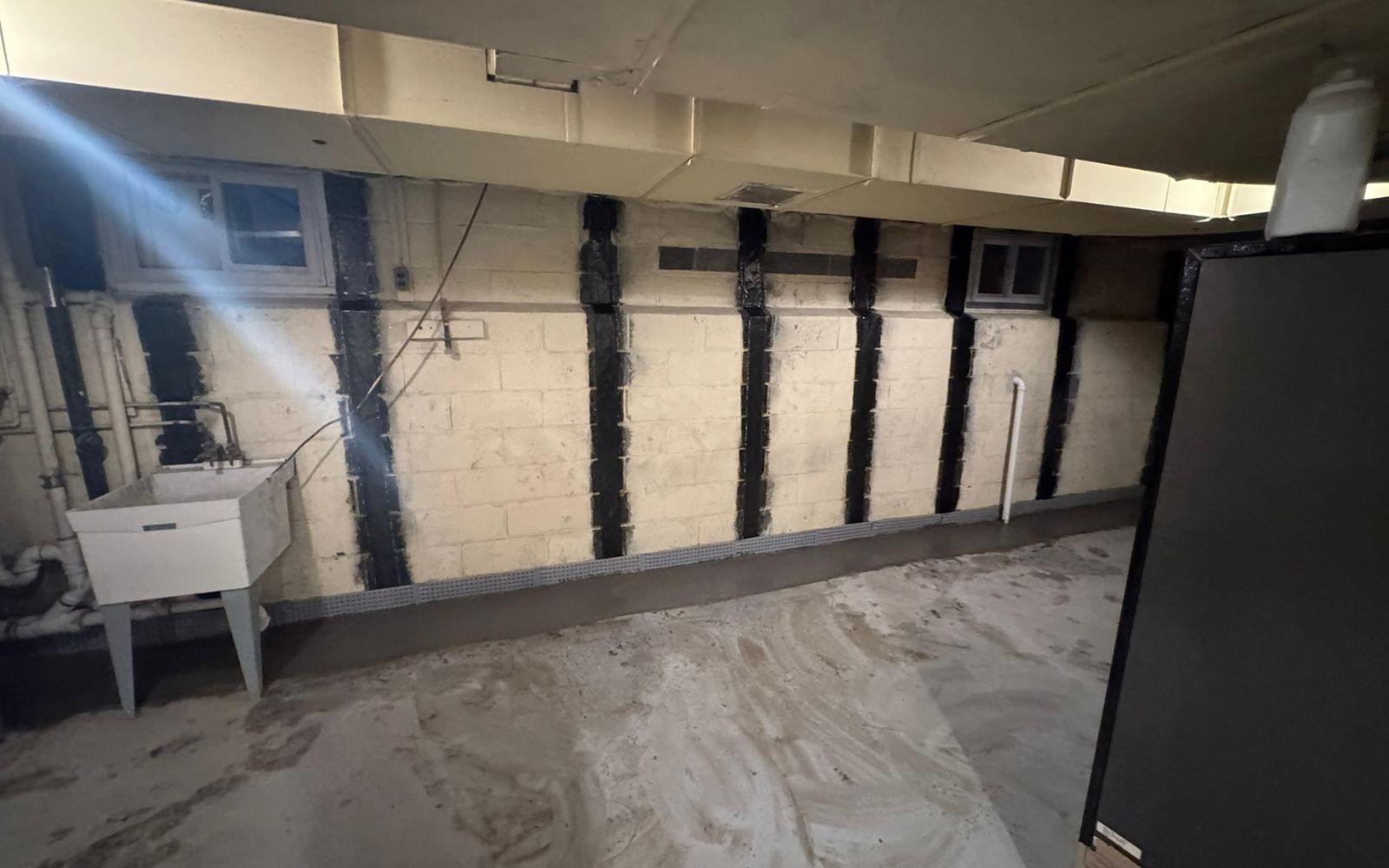
Carbon fiber straps are a modern solution ideal for walls with slight to moderate bowing (less than 2 inches). These straps, which are up to 10 times stronger than steel, are bonded vertically to the interior wall with high-strength epoxy. They create a powerful reinforcement that prevents any further inward movement.
Benefits:
- Minimally Invasive: They are installed entirely from the inside with no excavation required.
- Low Profile: The straps lie flat against the wall, taking up no space, and can be painted over.
- Durable: Carbon fiber is non-corrosive, ensuring a long-lasting repair.
Wall Anchors: The Classic Approach for Significant Bowing
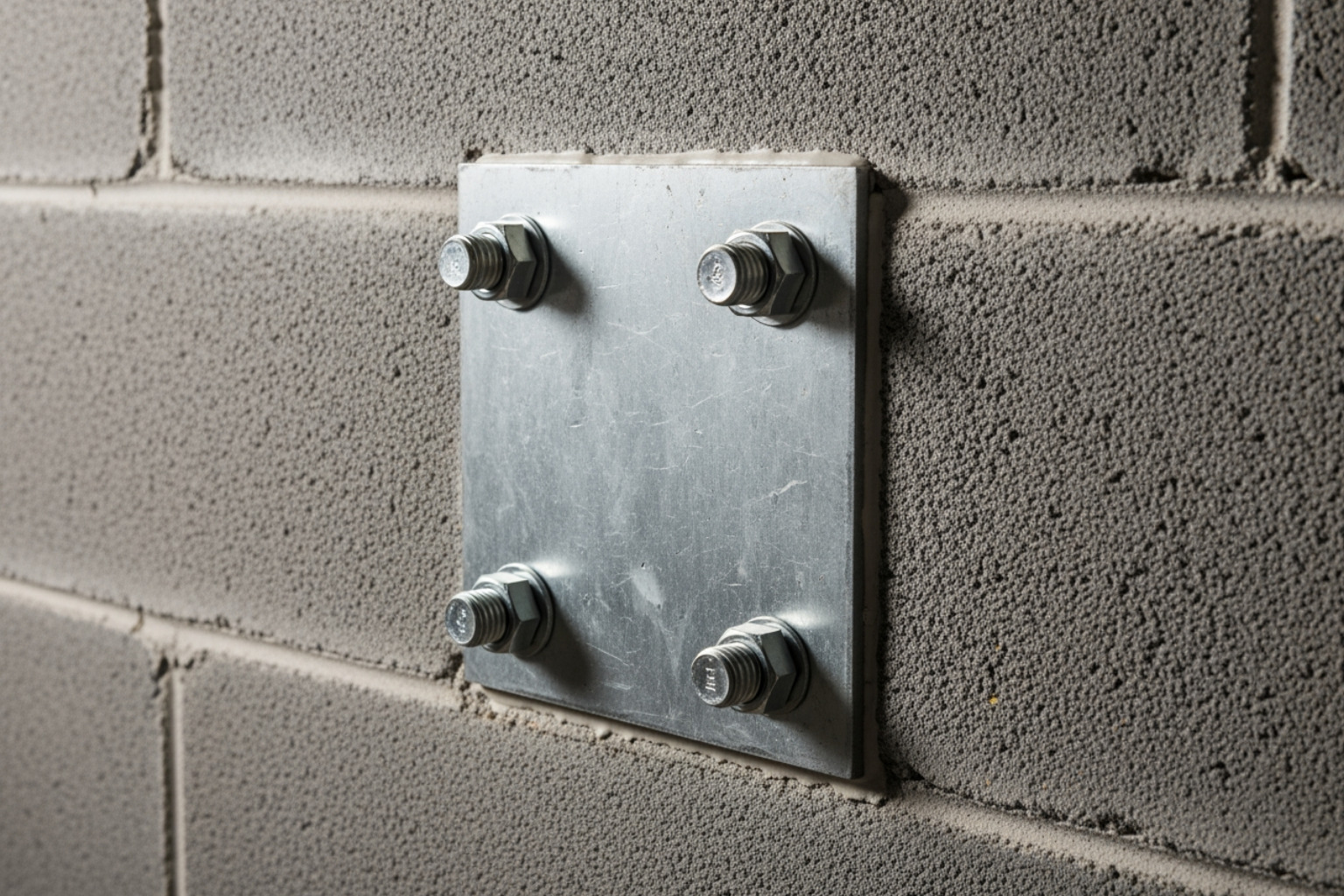
For more significant bowing (over 2 inches), wall anchors are a reliable solution. This method uses an interior steel plate connected by a steel rod to an anchor buried in stable soil outside. The system braces the wall against external pressure and can sometimes be tightened over time to help straighten the wall.
Drawbacks: The main drawback is the need for exterior excavation, which can disrupt landscaping. Wall anchors also do not solve water issues on their own, so they are often paired with water management solutions to address hydrostatic pressure.
Steel I-Beams: Interior Bracing for Maximum Support
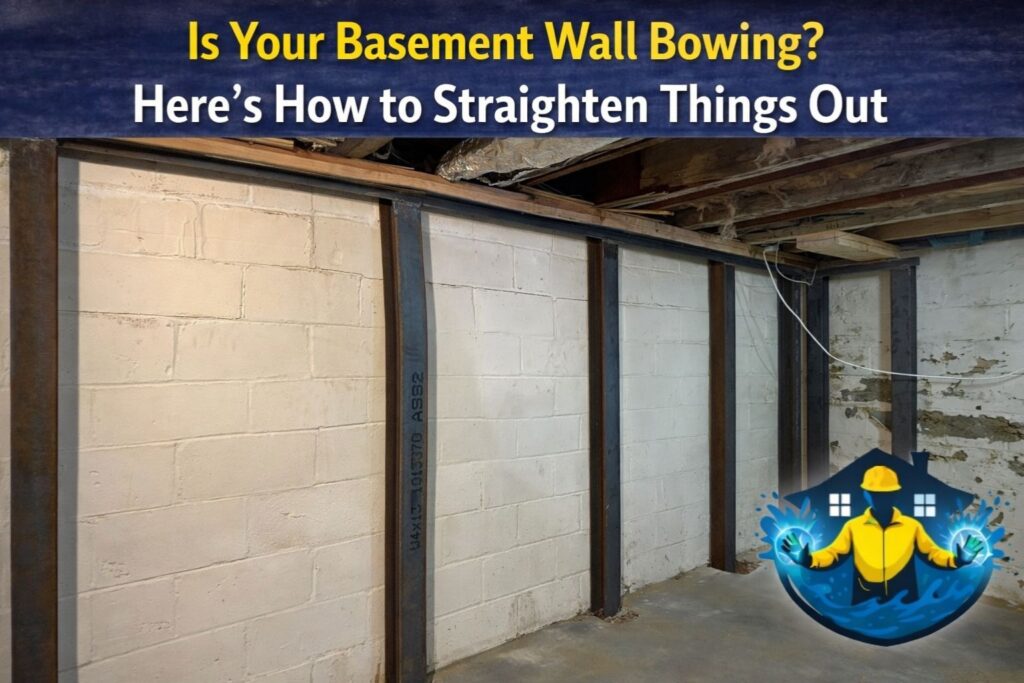
When exterior access is limited or bowing is severe, vertical steel I-beams offer robust interior support. The beams are installed against the bowing wall and anchored securely between the basement floor and the overhead floor joists. They act as rigid braces, immediately resisting inward pressure.
Benefits & Drawbacks: I-beams require no exterior excavation and provide immediate, powerful support. However, they are bulky and can be obtrusive in a finished basement space.
When is a Complete Wall Rebuild Necessary?
A complete wall rebuild is a last resort for bowing wall repair, reserved for severe structural failure. A rebuild is unavoidable when:
- Wall Shearing: The wall has shifted or separated from the foundation.
- Crumbling Materials: The concrete or blocks are too deteriorated to support a repair.
- Extreme Bowing: The wall is on the verge of collapse and cannot be safely stabilized.
The process involves demolishing and reconstructing the wall according to modern building codes. After any repair, but especially a rebuild, it is crucial to address the root cause of the pressure with proper waterproofing and Effective Drainage Solutions to protect the new wall.
Finalizing Your Repair: Costs, DIY Risks, and Finding Help
Choosing the right bowing wall repair is about protecting your home’s value, ensuring its long-term stability, and gaining peace of mind. An informed decision now prevents major expenses later.
DIY vs. Professional Repair: Why Expertise Matters for Bowing wall repair
While it may be tempting to save money, bowing wall repair is NOT a DIY project.
DIY Risks:
- Ineffective Fixes: Simply patching cracks with sealant is a cosmetic fix that ignores the underlying structural pressure. The problem will continue to worsen.
- Further Damage: An improper repair can weaken the wall, leading to a more severe and costly failure.
- Safety Hazards: Working on a compromised foundation is dangerous and risks injury or collapse.
Benefits of Professional Repair:
- Accurate Diagnosis: A professional can identify the root cause and severity of the issue.
- Correct Tools & Materials: Experts use industry-approved materials and specialized equipment for a permanent solution.
- Warranties: Reputable companies provide warranties, giving you confidence in the repair.
- Peace of Mind: Knowing your home’s foundation is professionally secured is invaluable.
Understanding the Costs and Choosing the Best Bowing wall repair
The cost of bowing wall repair varies based on the severity of the damage, the chosen method, and the size of the wall. Early intervention almost always results in lower costs.
Here’s a general comparison of the primary repair methods:
| Repair Method | Relative Cost (General) | Invasiveness | Best Use Case |
|---|---|---|---|
| Carbon Fiber Straps | Lower to Moderate | Minimally Invasive (Interior) | Slight to moderate bowing (less than 2 inches) |
| Wall Anchors | Moderate to High | Moderately Invasive (Exterior excavation) | Significant bowing (over 2 inches) |
| Steel I-Beams | Moderate | Minimally Invasive (Interior) | Severe bowing, limited exterior access |
| Wall Rebuild | Highest | Highly Invasive (Demolition & reconstruction) | Severe structural failure, wall shearing |
For an accurate estimate custom to your home, a professional inspection is essential. You can consult resources like Typical cost to repair bowing basement walls for general price ranges.
Think of this repair as an investment. It prevents catastrophic failure, protects your property value, and ensures your family’s safety. The cost of delaying repairs will only escalate.
At Premier Basement Waterproofing, we provide honest, transparent solutions for Monmouth County homeowners. We focus on educating you about your options and offering fair pricing. If you’re concerned about a bowing wall, don’t wait for the problem to get worse. Secure your home’s future by scheduling an inspection with us. Explore our Foundation Repair services today, and let’s straighten things out together. You can also call us at 732-720-1071 to schedule an inspection.
